Trauma Physiology
Understanding how trauma responses are held in the body and nervous system, and how this informs safe pacing and intervention.

Supporting previously trained MBIR™ practitioners through a structured transition review and alignment process toward current professional certification standards.
MBIR™ has evolved through years of practice, refinement and professional development. Existing practitioners are valued and supported in transitioning through an appropriate alignment pathway based on prior training, current practice, and demonstrated competency.
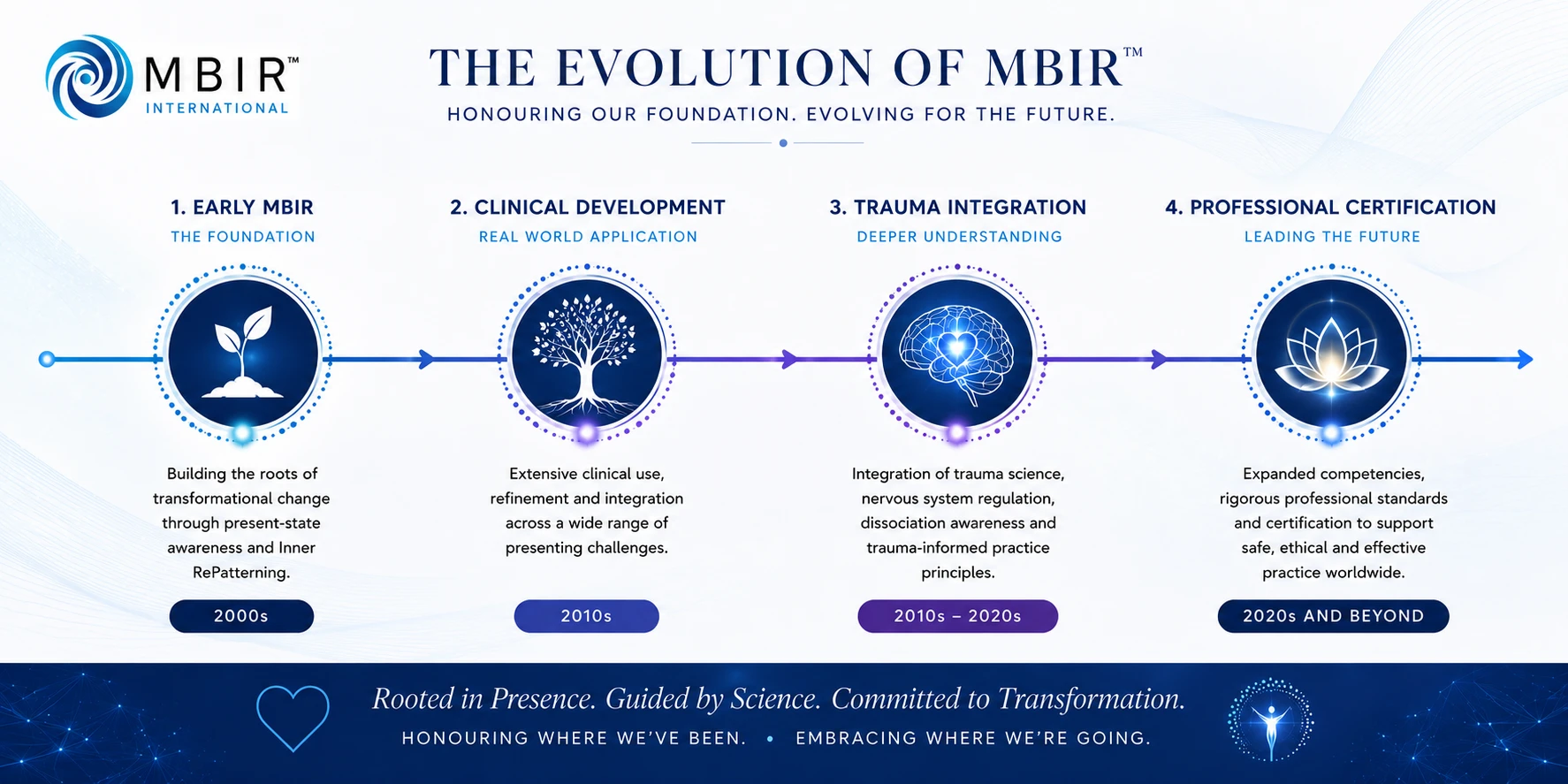
MBIR began as a powerful change methodology rooted in present-state awareness and Inner RePatterning.
Over time, extensive clinical application helped expand and refine the model across a wide range of client presentations. As understanding of trauma, nervous-system regulation, dissociation and trauma-informed practice deepened, MBIR™ developed into a more structured professional methodology.
The current certification framework reflects that development. It honours earlier learning while clarifying the additional competencies now expected of practitioners using MBIR™ professional titles within an international standards framework.
Previous training remains valuable. The purpose of transition is not to disregard earlier learning, but to support existing practitioners in aligning with the expanded professional framework.
Modern trauma-informed practice requires deeper competency, clearer boundaries, and an integrated understanding of nervous-system safety.
The expanded standards help support ethical practice, public confidence, client welfare and professional consistency across the MBIR™ community.
Understanding how trauma responses are held in the body and nervous system, and how this informs safe pacing and intervention.
Recognising immobilisation responses and adapting practice to avoid overwhelming or bypassing protective responses.
Identifying signs of dissociation and maintaining safe, grounded, present-state awareness throughout MBIR™ work.
Clarifying professional boundaries, referral responsibilities, and the appropriate application of MBIR™ within training and competence.
Supporting regulation, resourcing and stabilisation before, during and after deeper transformational work.
Applying the updated MBIR™ framework with clarity, consistency and sensitivity to client readiness and capacity.
Previous MBIR training remains recognised and valued as part of the methodology’s evolution.
Earlier practitioners helped shape the growth and refinement of MBIR. This transition process is designed to support continuity, professional confidence and respectful alignment with current standards.
All existing practitioners complete a transition review and follow an appropriate alignment pathway based on prior training, current practice, and demonstrated competency.
For advanced practitioners demonstrating strong existing competency in MBIR™ application and trauma-informed practice, requiring focused alignment rather than extensive bridging.
For practitioners requiring structured training to align with updated MBIR™ competencies and current certification standards.
For practitioners trained previously who are not currently practising, or who require broader competency rebuilding before certification review.
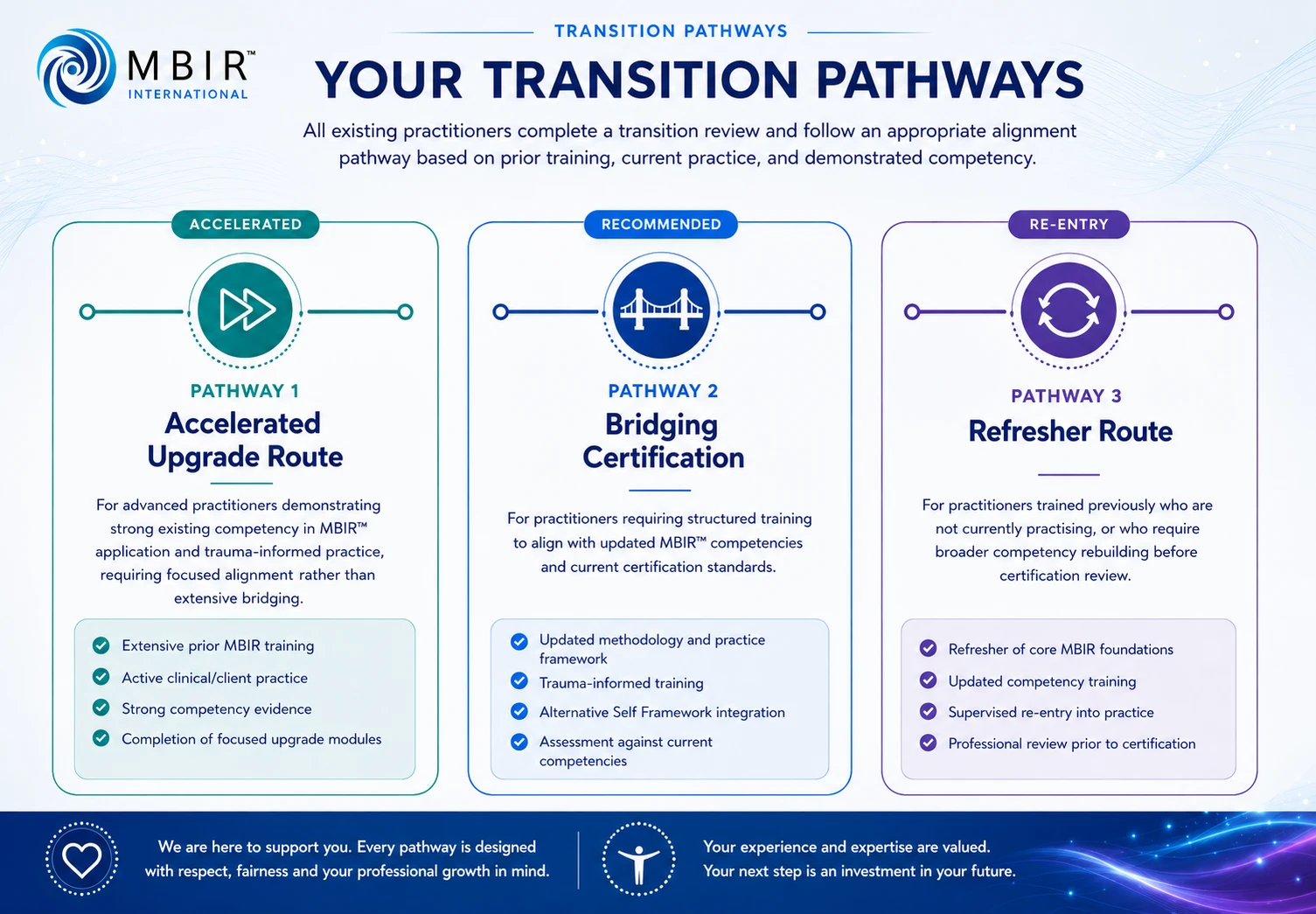
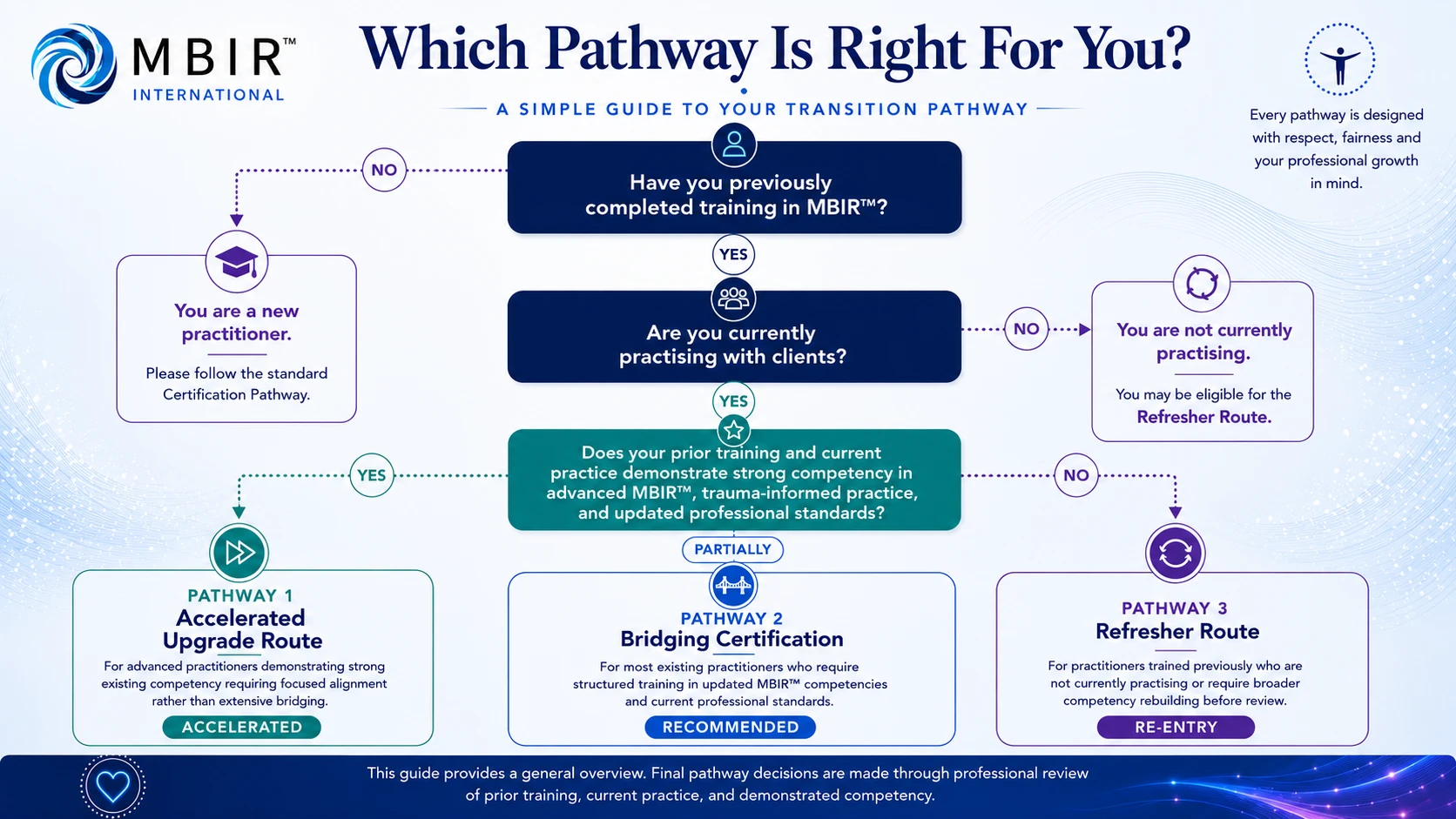
This decision guide offers a preliminary indication of your likely transition route. Final pathway decisions are based on formal professional review.
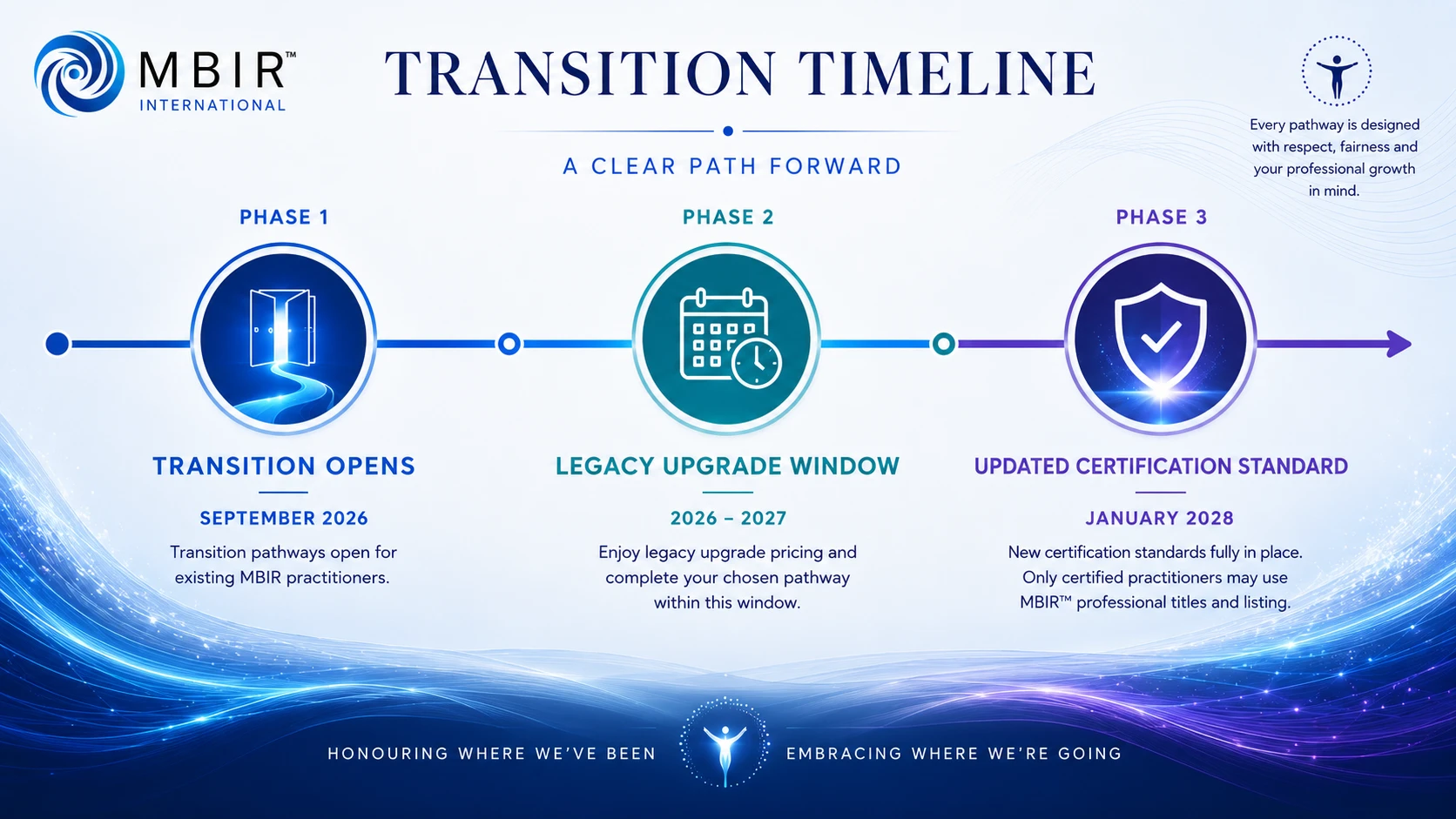
The transition timeline is designed to give existing practitioners time to review options, complete any required updates, and move toward the current certification framework.
Choosing not to upgrade does not erase or diminish your previous training. The transition framework simply clarifies which practitioners are aligned with the current professional certification standards.
Each practitioner is reviewed with respect for their previous learning, current practice experience and alignment with updated MBIR™ standards.
Review previous MBIR training and qualifications.
Assess current client or practitioner experience.
Evaluate alignment with updated competencies.
Determine most appropriate transition route.
These answers are intended to reduce uncertainty and support informed decision-making.
No. Previous certificates remain valid as evidence of training completed. The transition process relates to alignment with current MBIR™ professional certification standards.
Usually no. Most existing practitioners will be considered for a transition or bridging pathway based on prior training, current practice and demonstrated competency.
Costs depend on the pathway recommended after review. The intention is to provide fair legacy upgrade options during the transition window.
Yes. Practitioners may apply later, although legacy pricing or transition arrangements may only be available within the stated upgrade window.
Assessment will determine the most appropriate route. Some practitioners may benefit from the Refresher Route before moving toward current certification standards.
Your transition pathway is determined through professional review of prior training, current practice, case experience, and demonstrated competency against current MBIR™ certification standards.
Evidence may include previous training certificates, CPD records, supervision or mentoring evidence, case experience, and other materials relevant to competency review.
Yes. All existing practitioners will complete some level of alignment with updated MBIR™ standards. The amount of additional training depends on your transition pathway and competency review outcome.
Download the transition guide and self-assessment checklist to prepare for your pathway review.
A clear overview of the transition framework, pathway options, upgrade process and key dates.
A reflective workbook to help practitioners identify competency strengths, training gaps, and likely transition pathways before formal review.
A practical guide answering common questions about transition review, upgrade requirements, certification status, and pathway decisions.
We are committed to supporting existing MBIR™ practitioners with clarity, fairness, and respect as the methodology continues to evolve.
Every application is reviewed individually, recognising your previous training, current experience and professional development before a transition recommendation is made.