
Trauma-Informed Practice
A safer, ethical, and nervous-system-informed approach to supporting client change.
A Safer Way to Work With Client Change
Trauma-informed practice is an essential foundation for ethical, effective MBIR™ work.
MBIR™ recognises that many clients do not struggle because they are resistant, broken, or unwilling to change. Often, they are responding from protective patterns that developed to help them survive, cope, or stay safe.
A trauma-informed approach helps practitioners work with greater care, awareness, and responsibility.
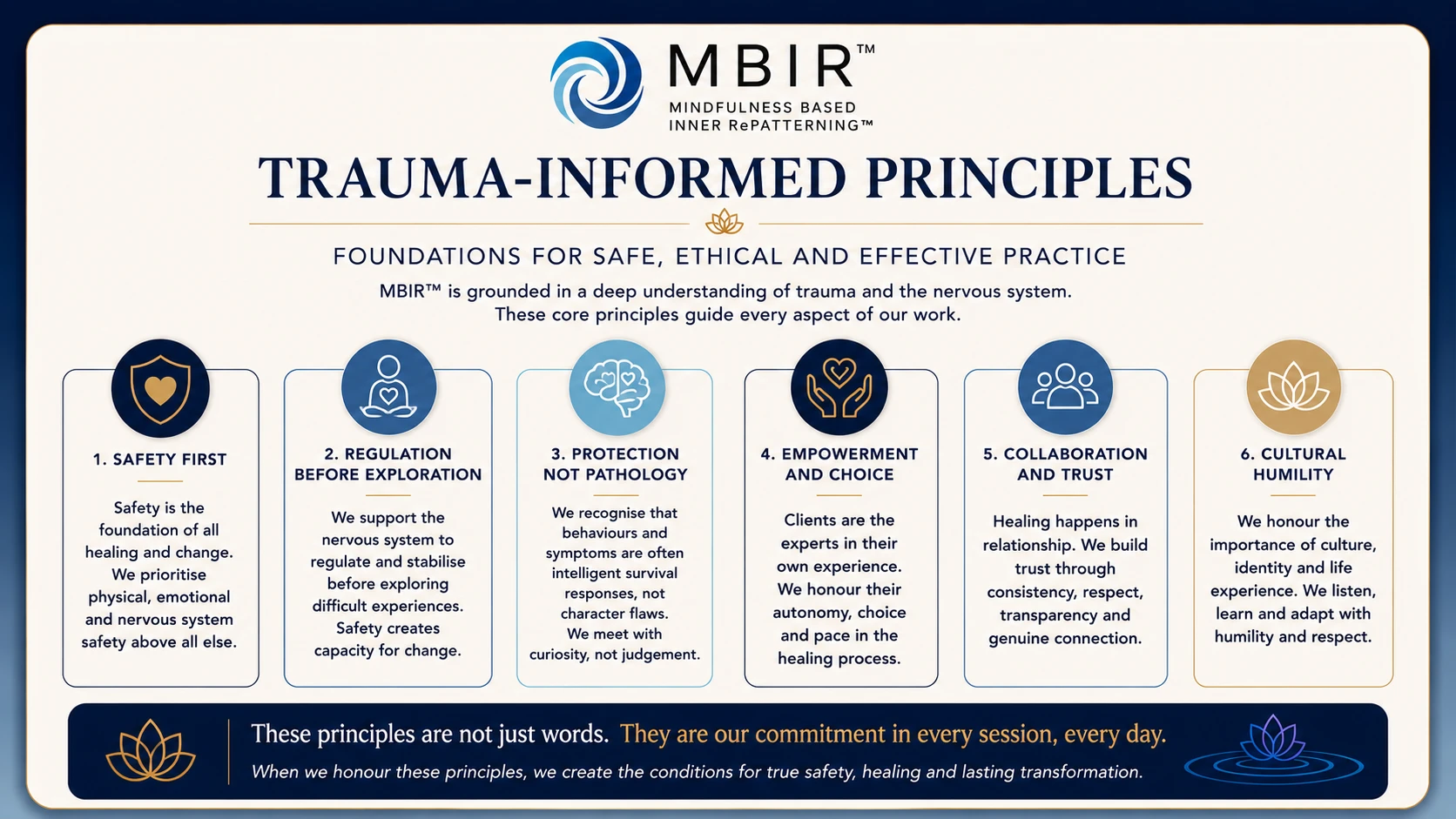
What Trauma-Informed Practice Means in MBIR™
In MBIR™ practice, trauma-informed care means working in a way that recognises the client’s protective responses, personal boundaries, readiness, and capacity for change.
- emotional and psychological safety
- regulation and stability
- choice and consent
- pacing and responsiveness
- respect for protective adaptations
- practitioner awareness of scope and competence
MBIR™ does not require clients to relive trauma, analyse painful memories, or disclose more than they are ready to share.
Instead, the emphasis is on creating conditions where the client’s system can begin to experience greater stability and choice.
Understanding Protective Nervous System Responses
Many client presentations such as anxiety, freeze responses, shutdown, shame, dissociation, overwhelm, avoidance, and people-pleasing can be understood as protective responses.
MBIR™ encourages practitioners to:
- observe
- regulate
- pace appropriately
- avoid forcing change
- work within the client’s window of tolerance
Core Principles
Safety First
The client’s sense of safety is prioritised before deeper therapeutic work.
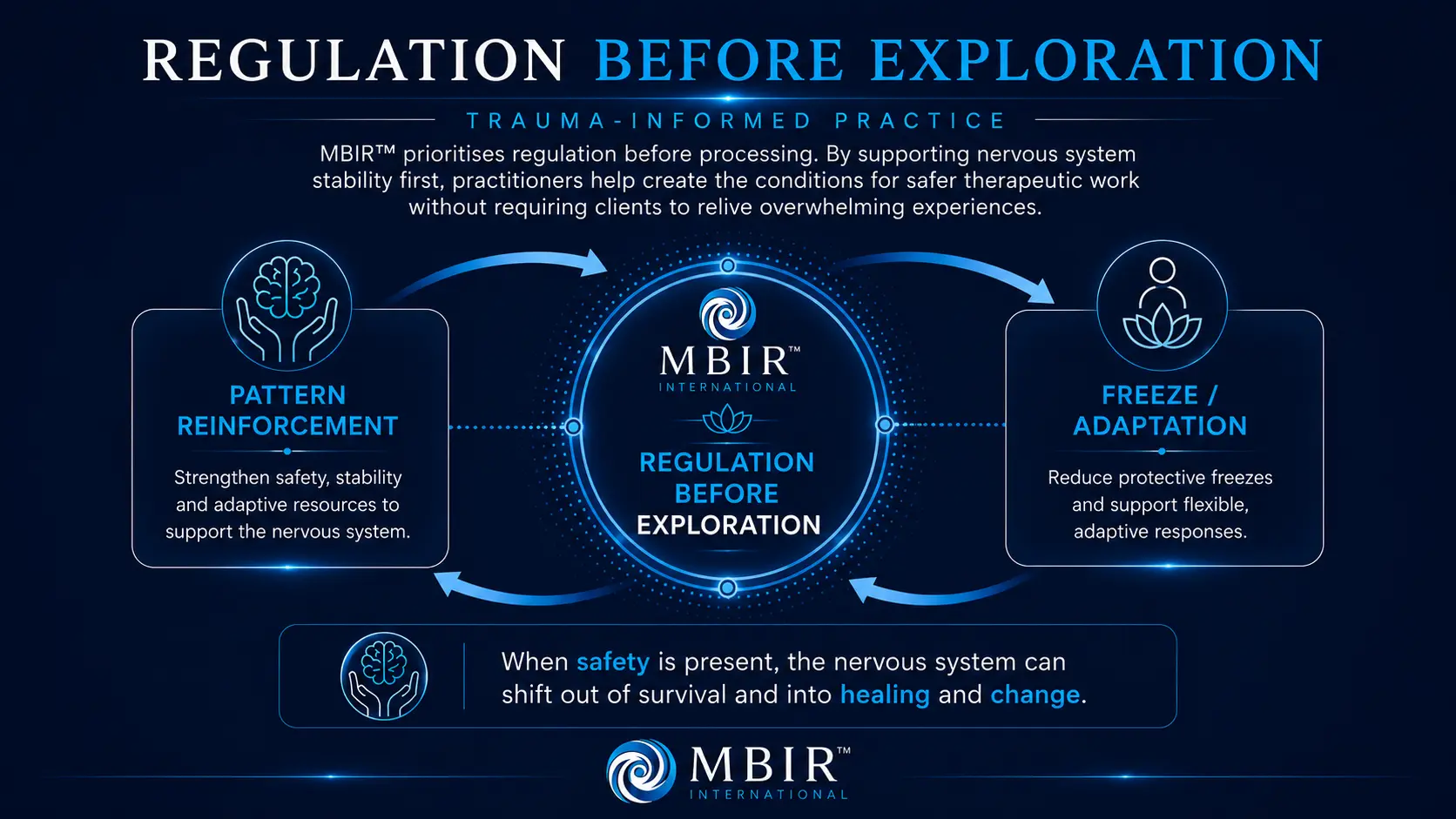
Regulation Before Exploration
Support the system to settle before deeper emotional processing.
Protection Is Respected
Protective adaptations are understood rather than challenged.
Choice and Consent
Clients remain in control throughout the therapeutic process.
Scope of Practice
Practitioners work only within their professional competence and training.
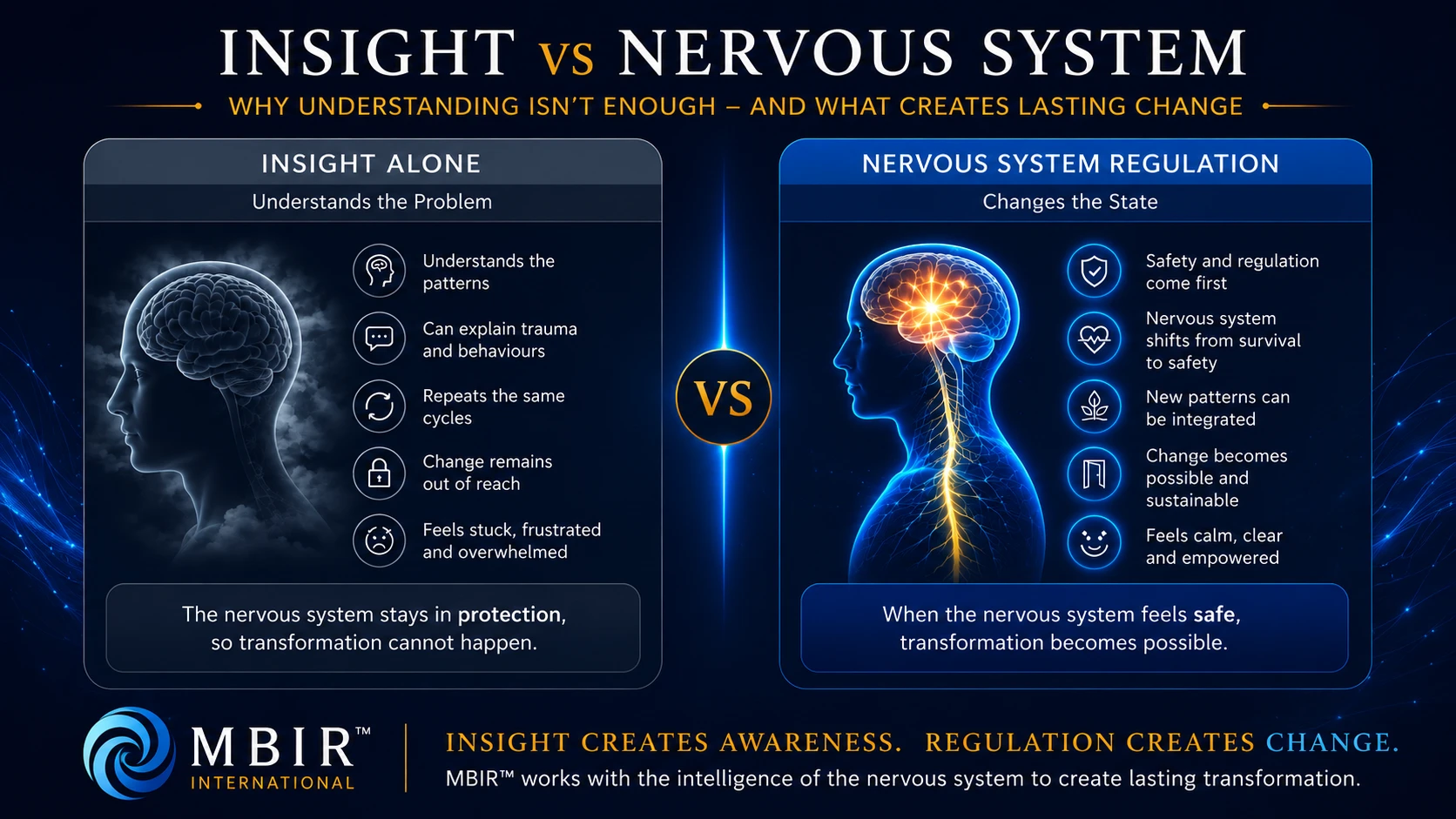
Insight and the Nervous System
Insight can create awareness, but lasting transformation often requires the body and nervous system to experience enough safety for new patterns to become possible.
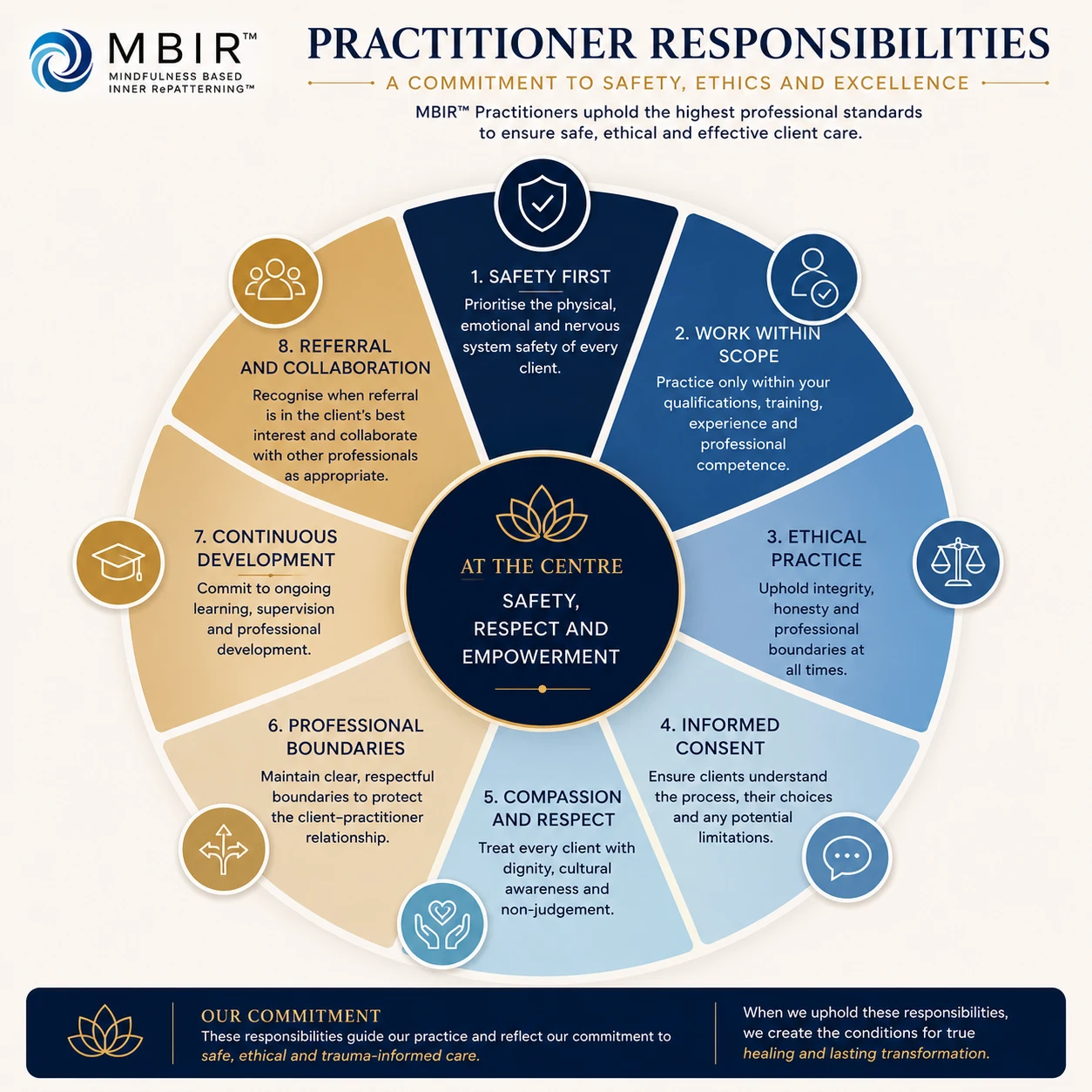
Practitioner Responsibilities
Practitioners should understand:
- nervous system states
- trauma responses
- dissociation
- emotional overwhelm
- pacing
- boundaries
- referral decisions
- ethical practice
Professional Standards and CPD
These competencies form part of MBIR™ Professional Standards and ongoing Continuing Professional Development.
Practitioners are expected to maintain awareness of their scope, continue developing their skills, and seek appropriate mentoring, supervision, CPD, or referral support when needed.
Professional Position Statement
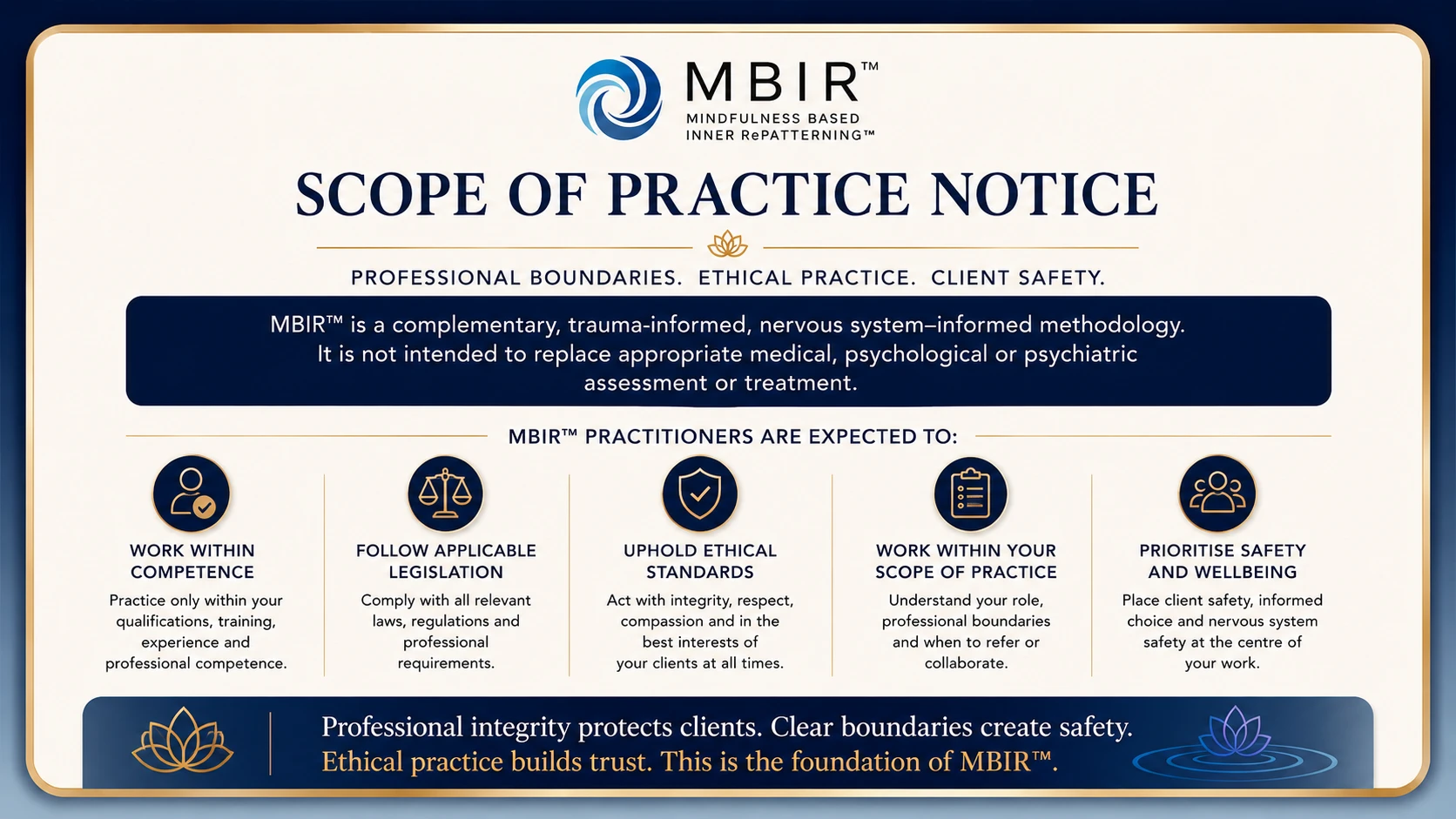
MBIR™ is a complementary, trauma-informed, nervous-system-informed methodology. It is not intended to replace appropriate medical, psychological or psychiatric assessment or treatment. MBIR™ Practitioners are expected to work within their professional qualifications, professional competence, applicable legislation and published Scope of Practice.
What MBIR™ Does Not Claim
MBIR™:
Linked Standards
Trauma-informed practice is supported by a wider MBIR™ governance framework, including professional standards, ethical principles, scope of practice, practitioner competencies, and trainer standards.
Continuing Professional Development
Trauma-informed practice is an ongoing professional commitment supported through:
- reflective practice
- supervision
- CPD
- practitioner development
- ethical accountability
MBIR™ International supports practitioners through governance documents, training standards, professional development, and practitioner resources.
Practitioner Hub
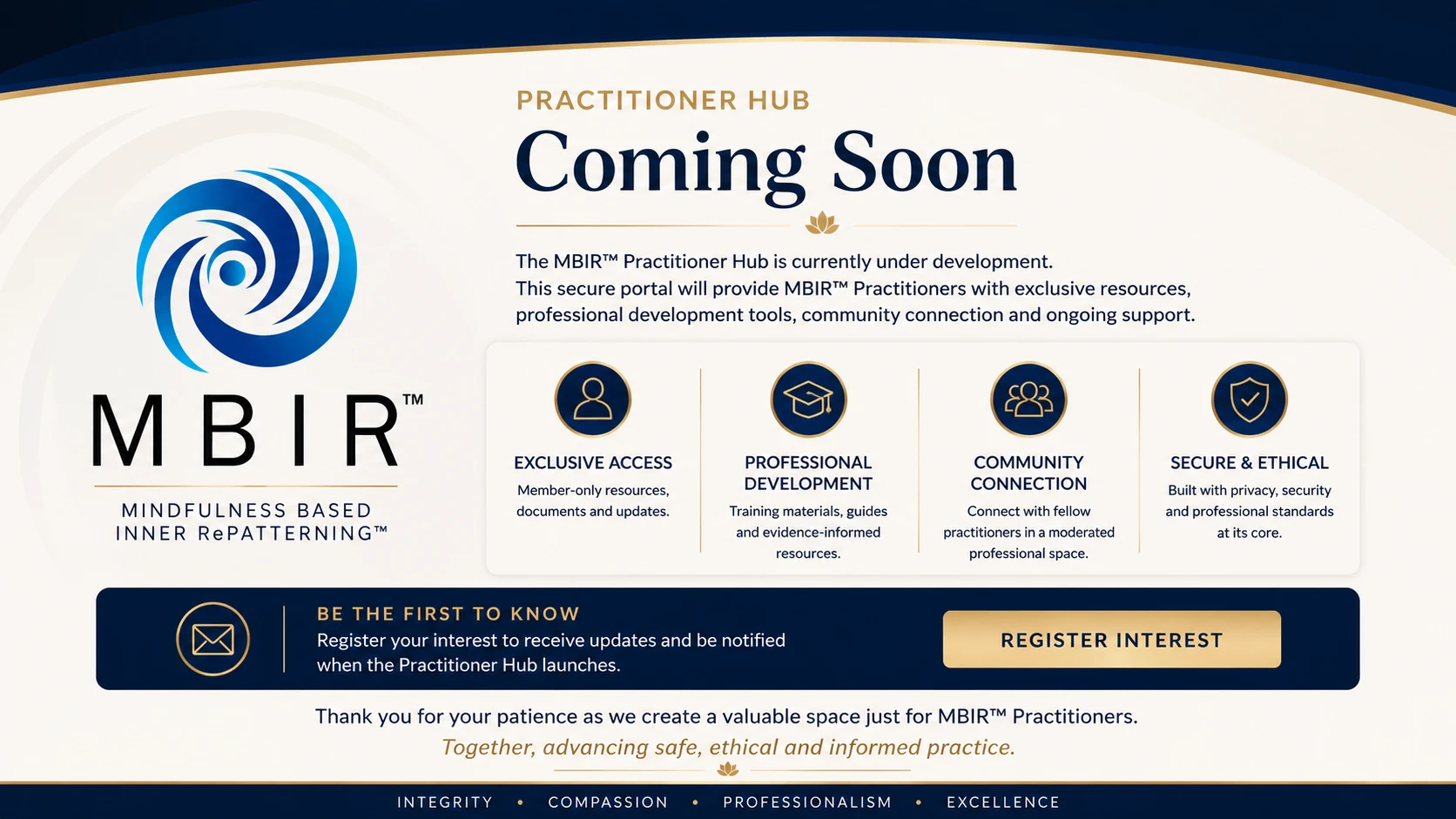
The MBIR™ Practitioner Hub will become the central professional portal for Certified MBIR™ Practitioners, Mentors and Approved Trainers. It will provide secure access to governance resources, certification guidance, continuing professional development materials, professional documentation and important MBIR™ International updates.
Continue Through the Framework
Explore the standards, governance framework, practitioner pathways, and professional resources that support safe, ethical, and evidence-informed MBIR™ practice.
Professional Standards
Understand the professional standards that guide safe and ethical MBIR™ practice.
View StandardsPractitioner Competencies
Explore the knowledge, skills and professional behaviours expected of Certified MBIR™ Practitioners.
View CompetenciesScope of Practice
Understand the professional boundaries and responsibilities of MBIR™ Practitioners.
View ScopeCertification Pathways
Explore the official certification routes recognised by MBIR™ International.
View PathwaysPractitioner Hub
Access professional resources, governance documents and continuing professional development.
Coming SoonTrauma-Informed Practice
Trauma-informed practice is not simply a technique—it is a professional commitment to safety, ethical responsibility and respectful client care. MBIR™ International is committed to embedding these principles throughout its professional standards, certification pathways and international governance framework.