Safety before depth
MBIR™ begins by supporting enough stability for therapeutic exploration to become safer and more effective.

Mindfulness Based Inner RePatterning™ (MBIR™) is a trauma-informed methodology designed to support deep change through nervous system regulation, present-state awareness and professionally guided therapeutic practice.
MBIR™ (Mindfulness Based Inner RePatterning™) was developed by Tania A Prince to help practitioners work with the protective patterns that can keep clients stuck emotionally, physiologically and behaviourally.
Rather than relying only on analysis or insight, MBIR™ supports therapeutic change through mindful awareness, inner resourcing, nervous system regulation and carefully paced exploration.
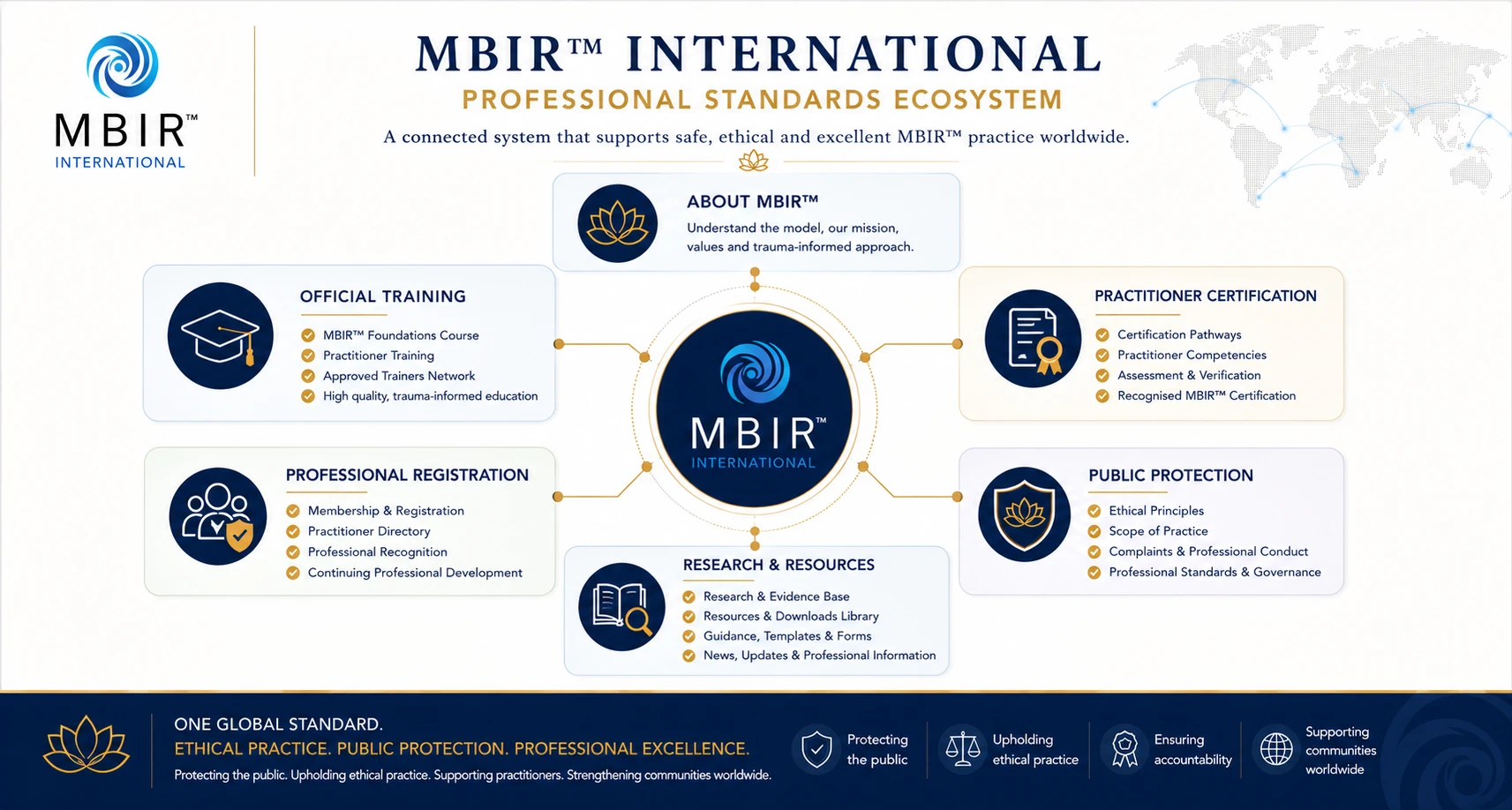
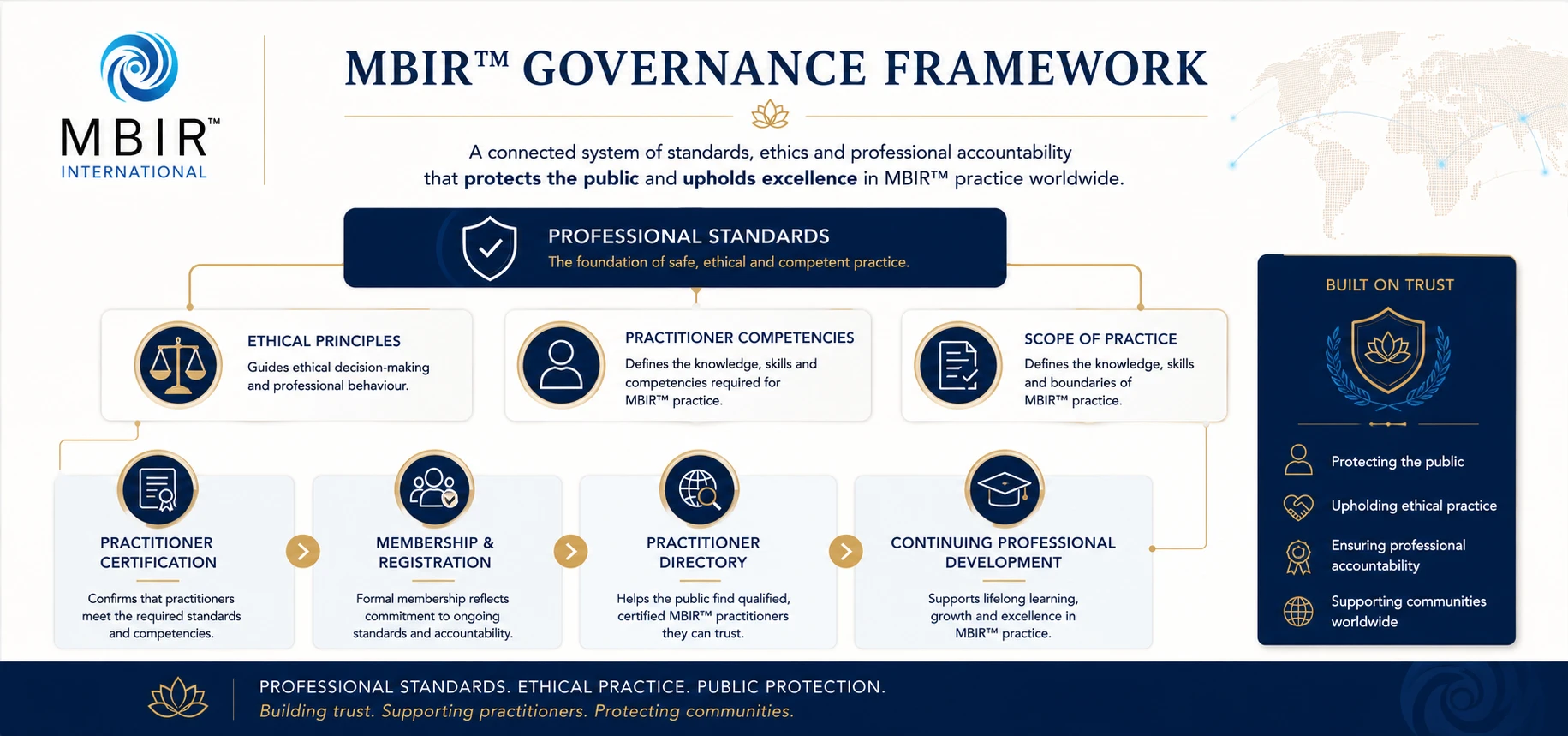
The methodology sits within the wider MBIR™ International professional standards framework, supporting safe, ethical and evidence-informed practice through defined Practitioner Competencies and certification pathways.
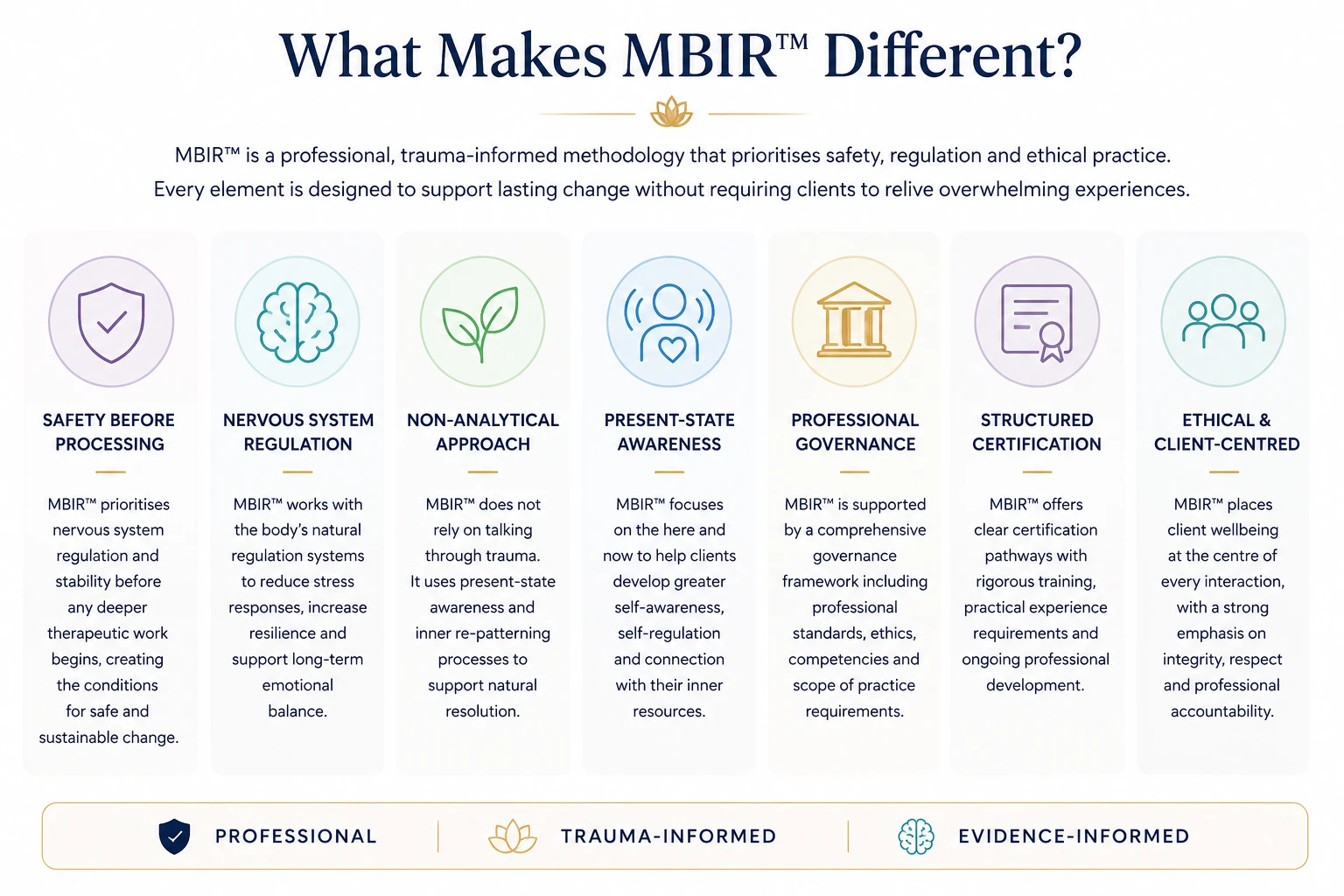
MBIR™ is a professional, trauma-informed methodology that prioritises safety, regulation and ethical practice. This graphic summarises the key features that distinguish MBIR™ from approaches that rely primarily on analysis, disclosure or reliving traumatic experiences.
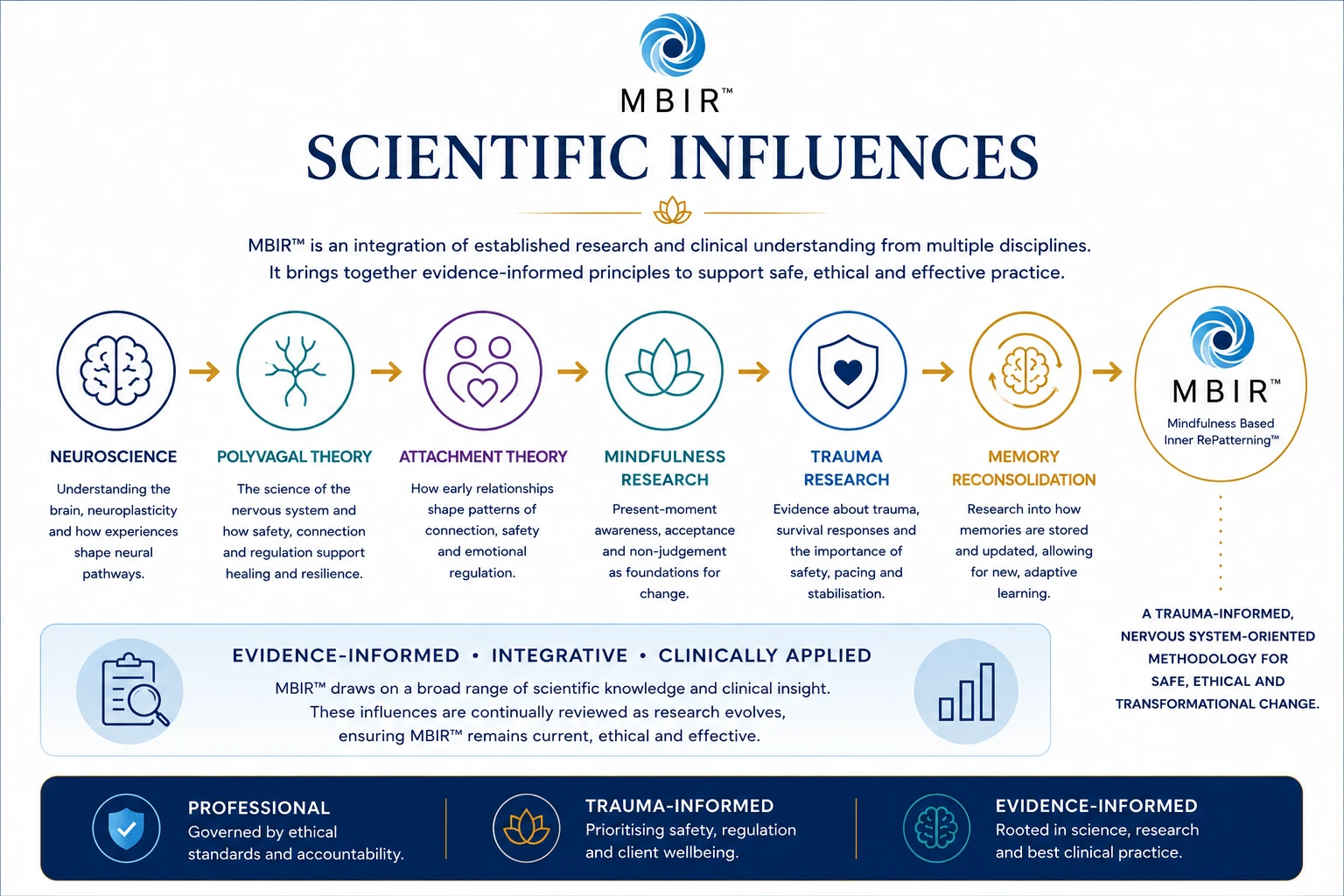
MBIR™ draws upon established research and clinical understanding from multiple fields, including neuroscience, trauma research, attachment theory, mindfulness research, nervous system regulation and memory reconsolidation. These influences support MBIR™ as an evidence-informed, trauma-informed and clinically applied methodology.
MBIR™ is supported by a structured professional governance framework designed to promote safe, ethical and evidence-informed practice. Together these elements provide consistency for practitioners, confidence for the public and clear standards for professional development.
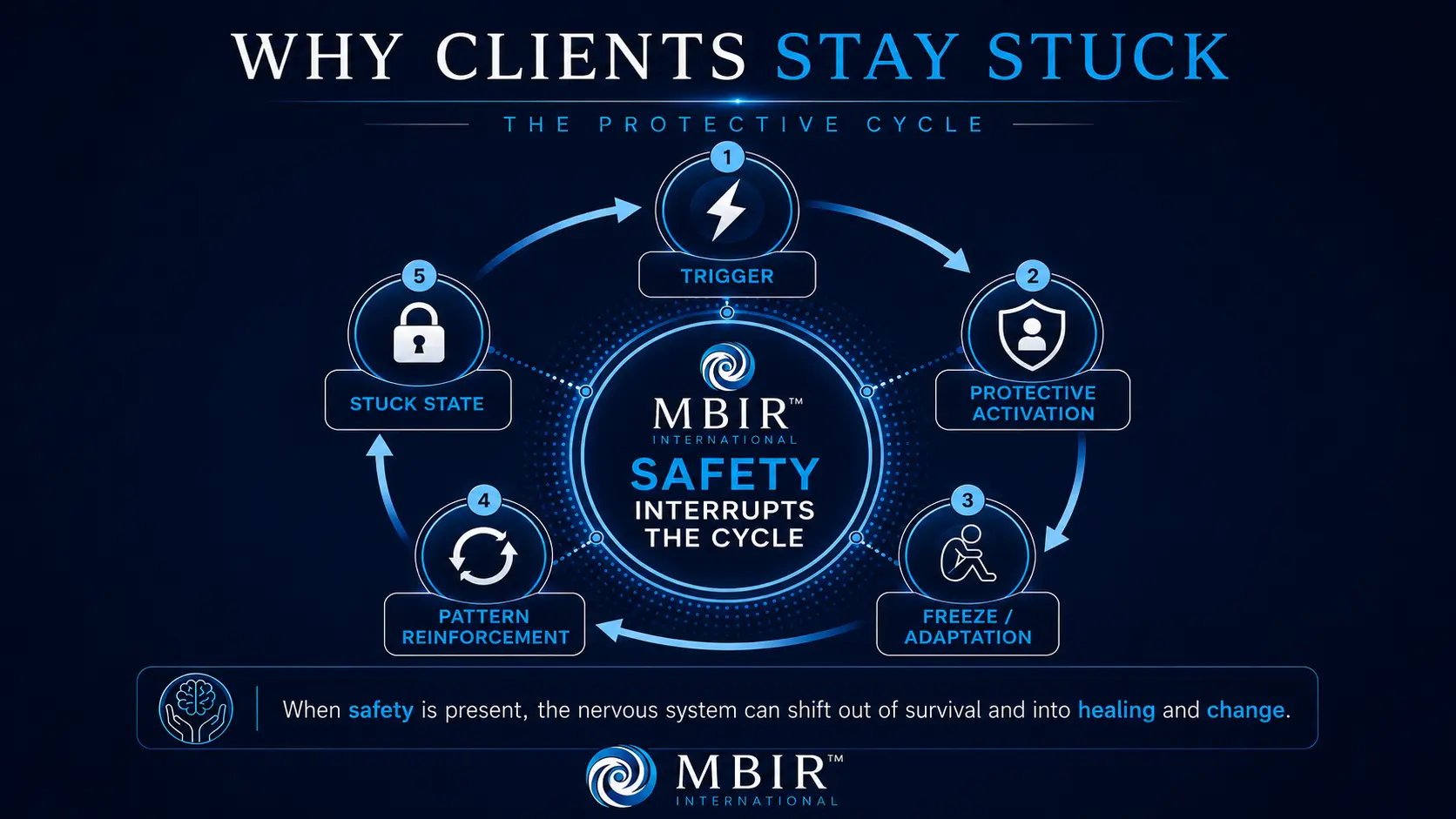
Many people can understand a pattern intellectually and still feel unable to change it. MBIR™ recognises that protective responses are often maintained beneath conscious analysis.
When the nervous system perceives threat, even positive change can feel unsafe. MBIR™ therefore works with capacity, regulation and protective adaptation before deeper exploration.
Many clients remain stuck not because they lack motivation, but because protective nervous system responses continue to reinforce familiar survival patterns. MBIR™ helps practitioners recognise these cycles and gently create the conditions for lasting change through safety rather than force.
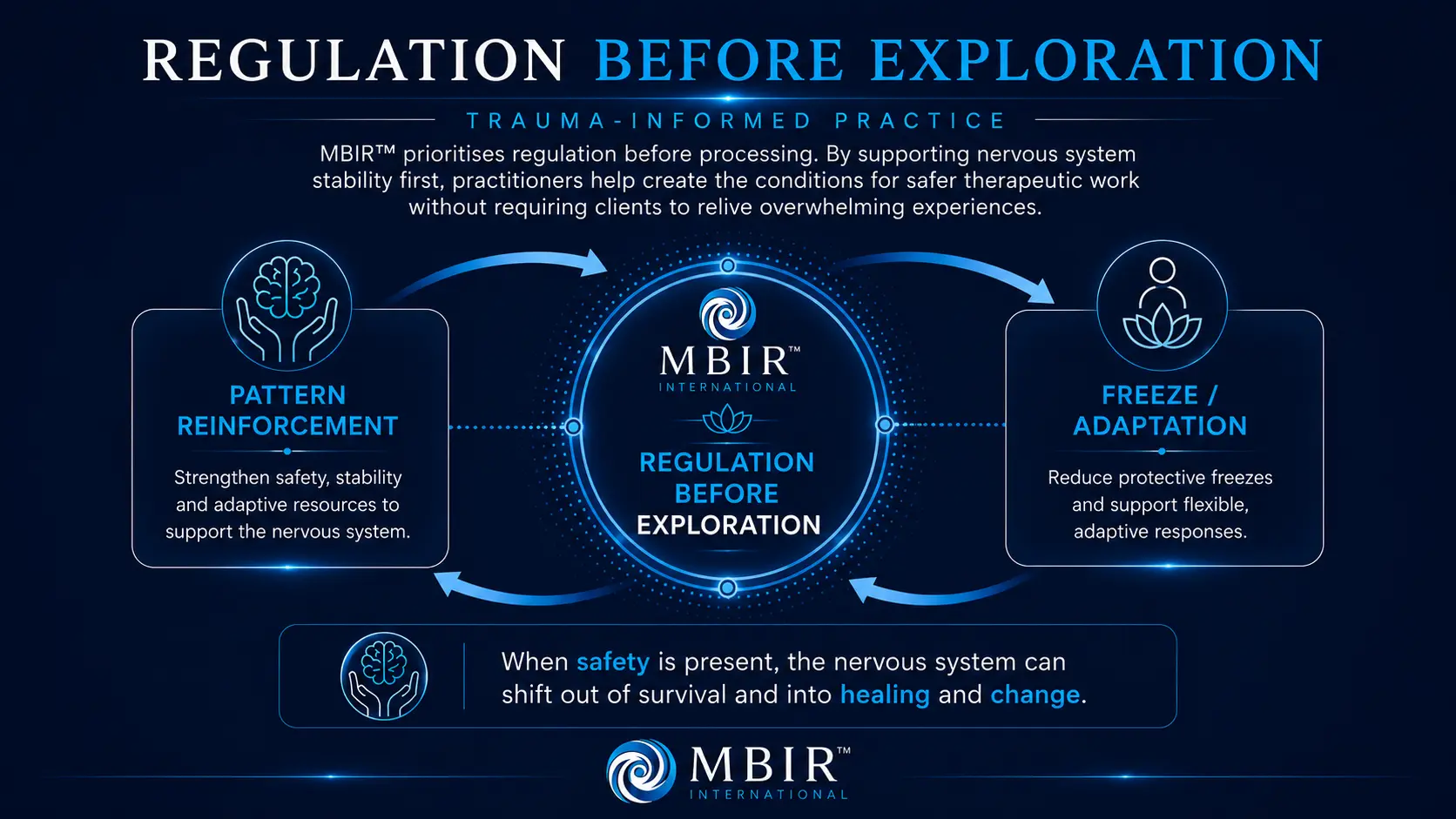
Understanding regulation before exploration is central to trauma-informed MBIR™ practice.
These principles introduce the clinical orientation of MBIR™ without duplicating the full specialist guidance available in the trauma-informed practice and professional standards pages.
MBIR™ begins by supporting enough stability for therapeutic exploration to become safer and more effective.
Protective patterns are understood as adaptive responses rather than personal failure or dysfunction.
Practitioners work with nervous system capacity before deeper material is approached.
MBIR™ uses mindful awareness to help clients notice present-moment responses without forcing analysis.
The methodology supports carefully paced therapeutic work rather than overwhelm or retraumatisation.
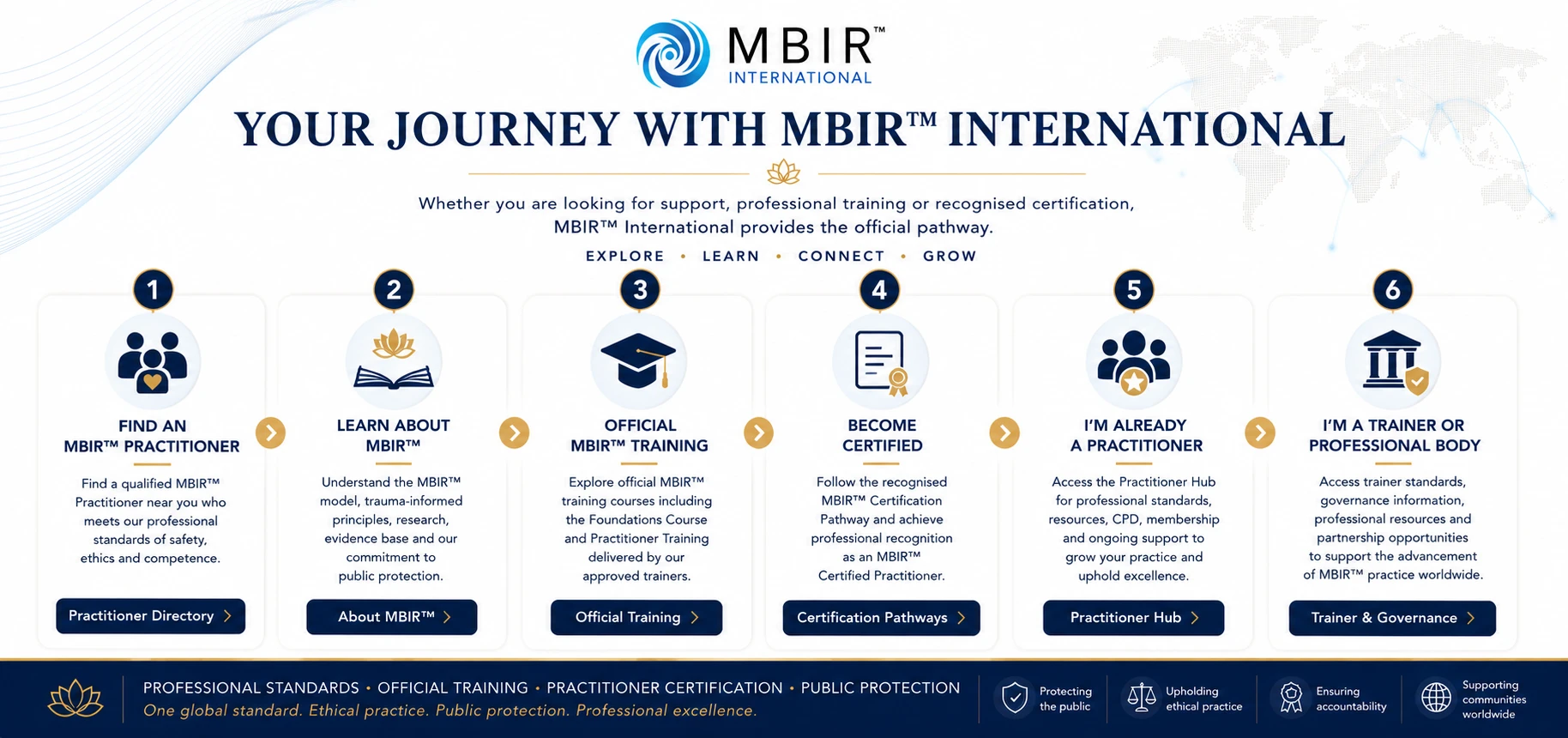
MBIR™ International supports practice through governance, competencies, ethics and certification pathways.
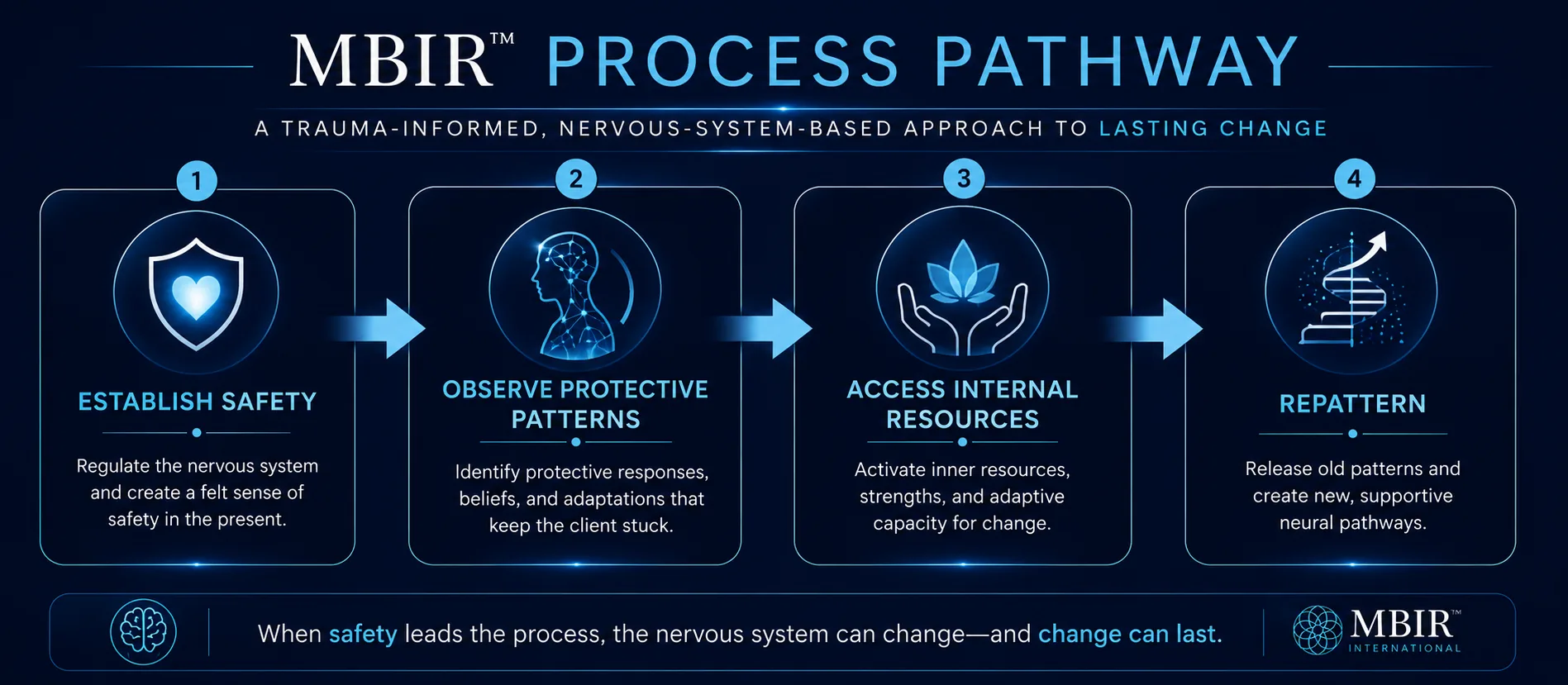
MBIR™ uses a staged process that supports safety, observation, inner resourcing and repatterning. Practitioner training develops the skills required to apply this process safely and ethically.
MBIR™ International maintains an integrated framework of professional standards designed to support ethical practice, practitioner competence and public protection.
MBIR™ has been informed by research and established knowledge across neuroscience, trauma, attachment, mindfulness and nervous system regulation. Explore the scientific influences that have shaped the development of the methodology.
MBIR™ is designed for professionals working with emotional change, trauma-informed methodology, regulation, therapeutic transformation and client safety. Training and certification pathways help practitioners work within the appropriate scope of practice and professional standards.

MBIR™ was developed by Tania A Prince through decades of clinical practice, professional training and research into trauma-informed, nervous-system-oriented approaches to transformational work. Her work has informed the development of the MBIR™ methodology and its international professional standards framework.
Continue exploring the MBIR™ International framework to understand certification, governance, professional standards and practitioner development.