Do You Need Qualifications to Train in EFT?

Do You Need Qualifications to Train in EFT?
If you are considering EFT training, you may be wondering whether you need to be a therapist, counsellor, coach or healthcare professional before you can begin.
For many people, the answer is no.
You do not necessarily need previous therapeutic qualifications to start learning Emotional Freedom Techniques (EFT). People come to EFT training from a wide variety of backgrounds. Some are already experienced therapists or healthcare professionals, while others are coaches, teachers, complementary practitioners or people who have become interested in EFT through their own experience of it.
What matters is understanding the difference between learning EFT, training to practitioner level, and becoming an accredited EFT practitioner.
These are related, but they are not quite the same thing.
What Is EFT?
Emotional Freedom Techniques, commonly known as EFT or tapping, is an approach that combines focused attention on an issue with tapping on a sequence of points on the face and upper body.
At first glance, EFT can look remarkably simple. You may have seen somebody tapping online and assumed that learning EFT means learning the tapping points and a few phrases to say while you tap.
That is only the beginning.
Professional EFT training involves learning how to identify what you are actually working on, how to target EFT effectively, how to structure a session, how to recognise when an issue is changing and how to adapt what you are doing in response to the client.
This is why there is an important distinction between knowing how to tap and being trained to work as an EFT practitioner.
Do I Need to Be a Therapist to Train in EFT?
No. You do not have to already be a therapist to attend EFT training.
Over the years, I have trained people from an enormous range of professional and personal backgrounds. Some arrive with extensive therapeutic experience. Others are completely new to therapeutic work.
Previous experience can certainly be useful, but it does not automatically determine whether someone will become a skilled EFT practitioner.
EFT itself needs to be properly learned.
When experienced therapists attend EFT training, they are learning a new therapeutic approach rather than simply adding tapping to what they already do. Existing therapeutic knowledge can be extremely valuable, but students still need to understand the principles and skills involved in using EFT effectively.
Equally, someone without a previous therapeutic qualification can develop considerable skill through appropriate training, practice, mentoring and consolidation.
You do not need to arrive at EFT training already knowing how to be an EFT practitioner. Developing those skills is part of the purpose of practitioner training.
Why Do People Train in EFT?
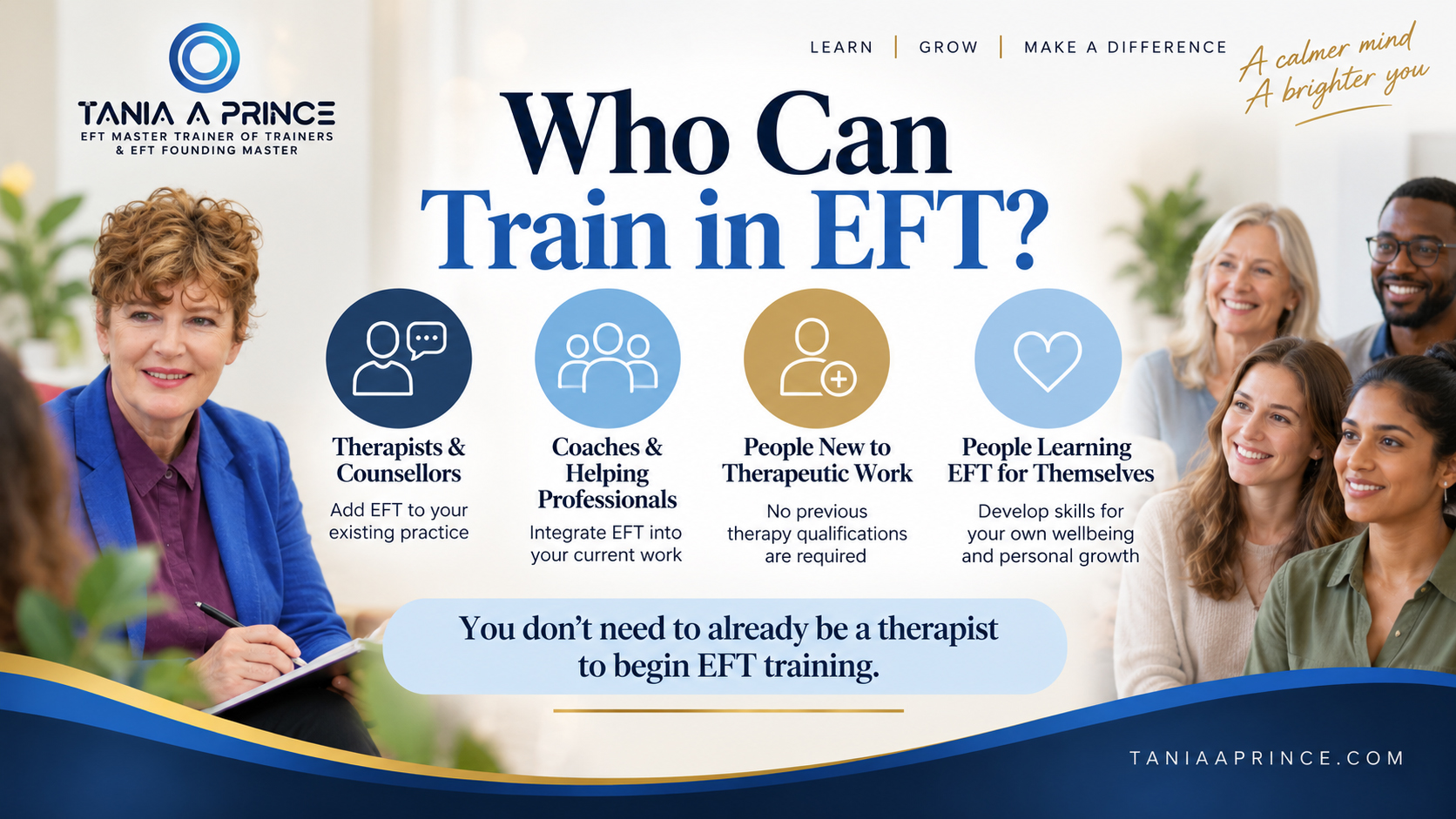
Not everybody who attends EFT training intends to become a professional EFT practitioner.
This is an important distinction.
Some people want to learn EFT primarily for themselves. Others want a much deeper understanding of EFT so that they can use it appropriately within their existing work. Some want practitioner-level knowledge and skills without any intention of setting up a professional EFT practice.
Others know from the beginning that they want to work professionally with clients.
These are all valid reasons to train.
My EFT Level 1 and Level 2 Practitioner Training is therefore not based on the assumption that everybody attending wants to become a full-time therapist. It provides structured training in EFT and, for those who choose to pursue professional accreditation, forms the foundation of that pathway.
What Is the Difference Between EFT Level 1 and Level 2?
EFT Level 1 introduces the foundations of EFT and provides an understanding of the core approach.
Level 2 takes the training considerably further and develops the skills required to work at practitioner level.
This means learning much more than a tapping sequence.
Students develop their ability to listen carefully, identify useful therapeutic targets, work systematically, recognise changes during a session and understand how different EFT approaches can be used in response to what emerges.
For people who want a thorough understanding of EFT, Level 2 can therefore be valuable even if they have no intention of becoming professional practitioners.
For those who do want to become accredited practitioners, Level 2 forms part of the pathway towards professional accreditation.
Can I Become an EFT Practitioner Without Previous Therapy Qualifications?
Yes, it is possible to begin the EFT practitioner pathway without already being a qualified therapist.
However, completing an EFT training course and becoming an accredited EFT practitioner are not the same thing.
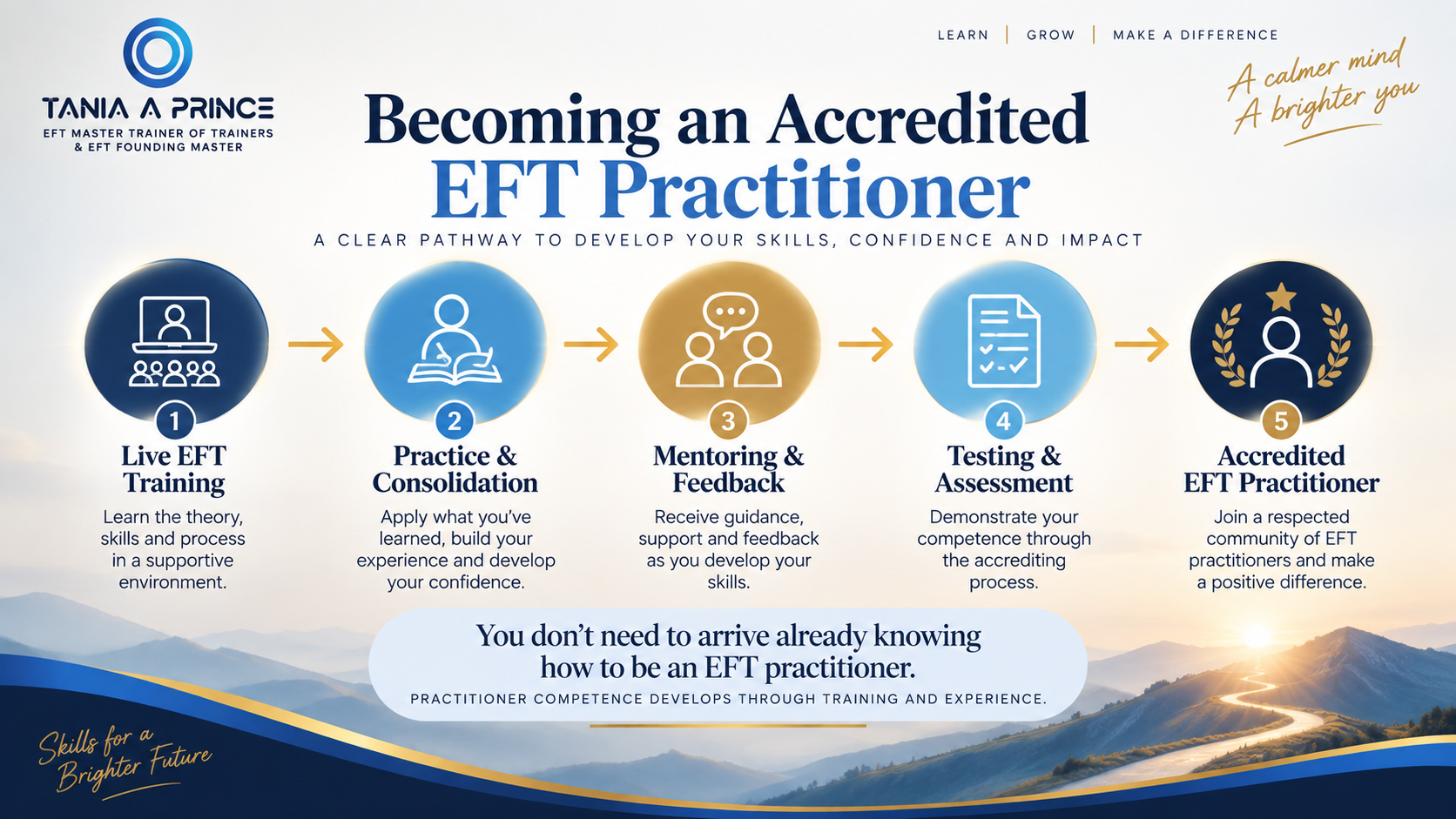
The live training provides the knowledge and skills that form the foundation of practitioner work. Following the training, students who wish to pursue accreditation enter a period of consolidation in which they continue practising and developing their competence.
This distinction matters because professional competence is not created simply by attending a course.
It develops through high-quality training, practice, feedback, mentoring, assessment and experience.
A student who begins EFT training without an existing therapy qualification may therefore start from a different place from an experienced psychotherapist, counsellor or coach, but both still need to develop competence in EFT itself.
What Happens After EFT Practitioner Training?
After completing the live Level 1 and Level 2 training, students who wish to pursue accreditation move into a post-training consolidation and testing phase.
This gives them time to practise what they have learned and develop greater confidence and competence before achieving accredited practitioner status.
Students are expected to complete the post-training consolidation and testing requirements within one year of attending the training. This is a requirement of the accrediting body and is designed to help maintain a high standard among accredited practitioners.
If the requirements are not completed within that period, students are required to re-attend the EFT Level 2 element of the training. I offer re-attendance at a discounted rate.
The fastest I have personally seen students achieve accreditation is approximately three to four months after completing the training.
For many people, it takes longer, and that is completely appropriate. The objective is not to move through the process as quickly as possible. It is to develop the knowledge, confidence and competence required to work effectively.
What If I Already Have Therapy, Counselling or Coaching Qualifications?
Existing professional experience can provide an excellent foundation for learning EFT.
A counsellor may already have considerable experience of therapeutic relationships, listening and boundaries. A psychotherapist may have extensive knowledge of emotional and psychological processes. A coach may bring highly developed communication skills and experience of helping clients explore patterns, beliefs and goals.
Those skills can all be valuable.
However, EFT has its own methodology.
One of the mistakes experienced practitioners can make is assuming that because they already know how to work therapeutically, they only need to learn where to tap.
There is considerably more to skilled EFT than the tapping points.
Effective EFT involves understanding what to target, how to target it, what to pay attention to and how to follow the client’s responses as the session develops.
Experienced therapists and people who are new to therapeutic work therefore bring different starting points to EFT training, but both need to learn EFT properly.
Does Previous Experience Make EFT Training Easier?
Sometimes, but not always in the way people expect.
Previous therapeutic experience can make certain aspects of practitioner training more familiar. An experienced practitioner may already be comfortable listening to clients, managing a professional relationship and discussing emotional material.
Someone new to therapeutic work may initially need to develop those skills alongside learning EFT.
However, being new can also mean approaching EFT without assumptions about how a therapeutic session should work.
The important question is not simply:
“What qualifications do I already have?”
A more useful question is:
“Am I prepared to learn, practise and develop the skills required to use EFT well?”
Practitioner development is a process.
What Should You Look for in EFT Training?
Whether or not you already have professional qualifications, the quality of your EFT training matters.
Look beyond simply asking how quickly a course can be completed.
Consider the trainer’s experience, the depth of the teaching, opportunities for practice during the training, whether demonstrations are included, what support is available after the live course and whether there is a clear pathway for developing competence.
I have 34 years of experience working therapeutically and 26 years of experience training therapists in EFT.
I was a member of the original AAMET training board, where I was involved in overseeing EFT training syllabuses and standards. AAMET subsequently became EFT International.
I was also the third therapist in the world to be awarded trainer status by AAMET and was later invited by EFT founder Gary Craig to become one of the original 29 EFT Masters.
Today, as an EFT International Accredited Master Trainer of Trainers, I train both EFT practitioners and EFT trainers.
That depth of experience has strongly influenced the way I teach.
My aim is not simply for students to learn the mechanics of EFT. I want them to understand how to think therapeutically with EFT — how to listen, recognise what is happening within a session, identify appropriate targets and adapt their approach in response to the individual client.
Can EFT Training Be Completed Online?
Yes.
My EFT practitioner training is delivered live online rather than as a self-paced video course.
During the live training, I teach the core material, demonstrate EFT, answer questions and provide opportunities for students to practise. Training assistants support the practice sessions and can enter breakout rooms to provide additional guidance when needed.
The teaching, demonstrations and relevant questions are recorded. Students’ private practice sessions are not recorded.
After the training, attendees receive access to a private online training platform containing the recordings together with additional demonstrations and learning resources.
This supports the important period of consolidation that follows the live training.
Watching EFT videos online can be useful for discovering EFT, but it is very different from undertaking structured practitioner training. EFT is demonstrated in many different ways online, and without a clear training framework it can be difficult to know whether what you are watching represents good practitioner practice.
Do I Need Qualifications to Practise EFT Professionally?
This is slightly different from asking whether you need qualifications to start EFT training.
You do not need to arrive at the training with an existing therapy qualification. However, if your intention is to work professionally with clients, you need to consider the professional requirements associated with that role.
Training is only one part of professional practice.
Practitioners also need to work within their competence and appropriate professional and ethical boundaries. Depending on how and where you intend to practise, you may also need appropriate professional insurance and to meet the requirements of relevant professional or accrediting organisations.
This is one of the reasons I believe it is important to distinguish between attending an EFT course and developing as an EFT practitioner.
A certificate of attendance is not the same as practitioner competence.
So, Do You Need Qualifications to Train in EFT?
If your question is:
“Do I need to already be a therapist, counsellor or healthcare professional before I can train in EFT?”
The answer is no.
People can begin EFT training from many different professional and personal backgrounds.
What matters is what you want to do with the training.
You may want to learn EFT for yourself. You may want practitioner-level knowledge without intending to work professionally. You may want to integrate EFT into an existing profession. Or you may want to follow the pathway towards becoming an accredited EFT practitioner.
If professional practice is your goal, EFT training is the beginning of a developmental process rather than simply a course to complete.
Good practitioner training should help you develop not only an understanding of how to tap, but also the ability to understand what you are working with, what to target and how to respond to the person sitting in front of you.
You do not need to arrive already knowing how to do that.
That is what practitioner training is there to teach you.
Find Out More About EFT Practitioner Training
If you are considering training in EFT, you can explore my live online EFT Level 1 and Level 2 Practitioner Training to learn more about what is covered, how the training works and the pathway available after completing the live course.
You may also find the other articles in my EFT Training series useful:
- What Is EFT Training?
- How Do I Become an EFT Practitioner in the UK?
- EFT Level 1 vs Level 2
- What Happens on an EFT Practitioner Training Course?
- Can You Learn EFT Online?
- How Long Does It Take to Become an EFT Practitioner?
- EFT Certification vs Accreditation
- What Can You Do After EFT Practitioner Training?
- Can EFT Practitioners Charge Clients?
- What Makes a Good EFT Training Course?
- Questions to Ask Before Choosing an EFT Trainer