
Can EFT Help Calm the Nervous System?
It is also something we feel in the body.
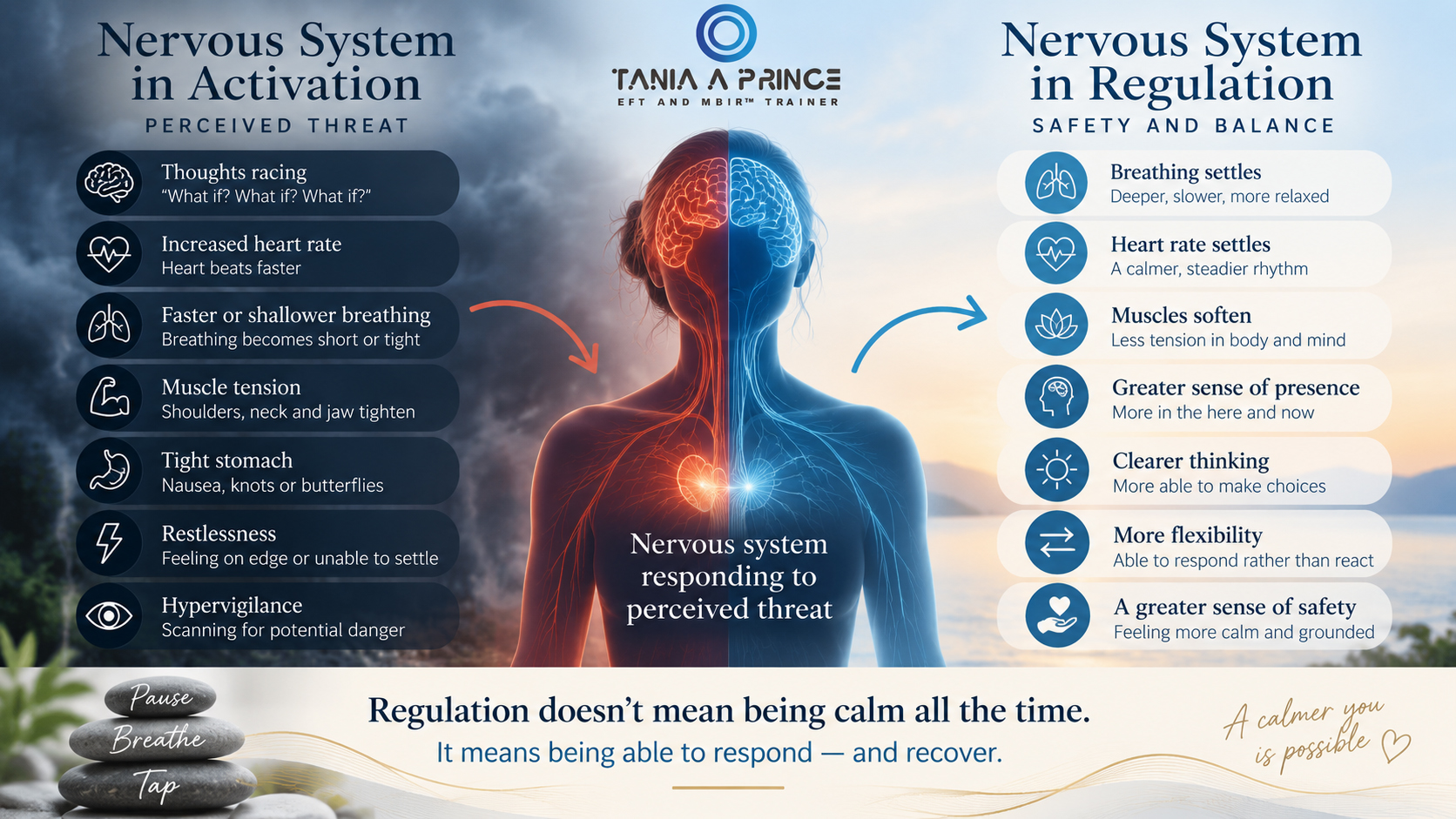
Your heart may beat faster. Your breathing may change. Your stomach may tighten. Your muscles may tense. You might feel restless, shaky, hot, nauseous or unable to settle. At other times, anxiety can leave you exhausted, disconnected or wanting to withdraw.
These physical reactions are part of the body’s response to perceived threat.
This is one reason Emotional Freedom Techniques (EFT), often known simply as EFT tapping, can be particularly interesting when we are talking about anxiety.
Rather than working only with thoughts, EFT combines focused attention on what is troubling you with tapping on specific points on the face and upper body.
Increasingly, research is exploring whether EFT may influence not only how people feel psychologically, but also physiological processes associated with stress.
So, can EFT help calm the nervous system?
The evidence is promising, although there is still much we need to understand about exactly how EFT produces its effects.
What Happens to the Nervous System When We Feel Anxious?
Your nervous system is continually gathering information.
It receives information from the world around you and from inside your body and brain. Much of this happens outside conscious awareness.
One of its jobs is to help determine:
Am I safe, or is there something I need to respond to?
If your brain and body detect something potentially threatening, protective responses can be activated.
The sympathetic nervous system is involved in mobilising the body for action. Your heart rate may increase, your breathing can become faster and your muscles may prepare you to move.
This can be extremely useful when there is an immediate physical threat.
The difficulty is that humans don’t only respond to threats that are happening right now.
We can respond to:
- something we imagine might happen;
- something that happened in the past;
- an uncomfortable social interaction;
- thoughts about work;
- uncertainty about the future;
- memories of rejection or embarrassment;
- physical sensations we interpret as dangerous;
- or even the thought of having another anxiety or panic episode.
The threat can therefore be psychological rather than physical, while the body’s reaction can still be very real.
You can intellectually know that you are safe and still feel anxious.
That distinction is important.
Anxiety Isn’t Simply a Thinking Problem
People experiencing anxiety are often told to “stop worrying”, “think positively” or “try not to think about it.”
If it were that easy, anxiety would rarely become a problem.
When your protective systems have become activated, simply telling yourself that everything is fine may not be enough to change what is happening in your body.
This is where body-based approaches become particularly interesting.
EFT incorporates both psychological and physical components.
During tapping, you bring gentle attention to an emotion, thought, memory, physical sensation or situation while tapping with your fingertips on a sequence of points on the body.
Rather than trying to force anxiety away, EFT allows you to acknowledge what is actually happening while tapping.
For example:
“Even though part of me feels really anxious about this meeting tomorrow, this is what I’m noticing right now.”
Or simply:
“This tight feeling in my chest.”
The aim isn’t to convince yourself that you shouldn’t feel anxious.
You begin with what is already there.
What Is EFT Tapping?
Emotional Freedom Techniques developed from approaches combining psychological techniques with stimulation of specific points on the body.
A typical EFT tapping sequence involves tapping gently on points including:
- the side of the hand;
- eyebrow;
- side of the eye;
- under the eye;
- under the nose;
- chin;
- collarbone;
- under the arm;
- and top of the head.
At the same time, you focus on the issue you are working with.
This might be a thought:
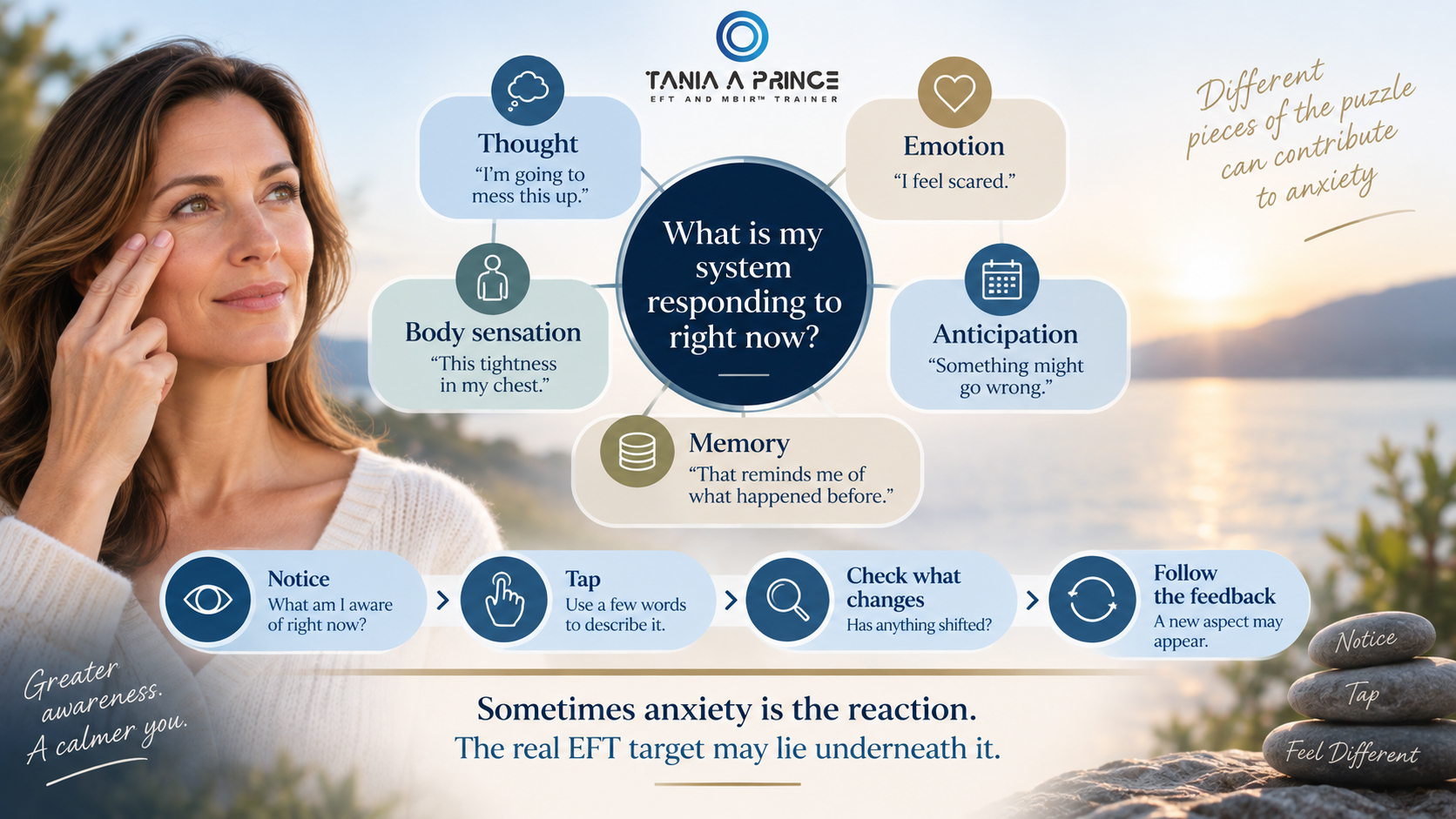
“I’m going to mess this up.”
A feeling:
“I’m scared.”
A physical sensation:
“This knot in my stomach.”
Or a specific experience:
“The moment they asked me to speak in front of everyone.”
One of the strengths of EFT is that it gives you a structured way of staying connected to what is happening while introducing tapping.
Can EFT Really Affect the Stress Response?
This is an important question because it moves the discussion beyond simply asking whether people say they feel better after tapping.
Researchers have begun examining physiological measures associated with stress.
Cortisol has received particular attention.
Cortisol is one of the hormones involved in the body’s stress response. It isn’t a “bad” hormone — we need it — but changes in cortisol can provide researchers with one way of investigating physiological responses to stress and interventions.
A randomised controlled study published in 2012 compared an EFT intervention with a supportive interview and a no-treatment condition. The EFT group showed a significantly greater reduction in salivary cortisol alongside improvements in measures of psychological distress.
A later study revisiting this area also found a significant reduction in cortisol following EFT, although changes in subjective psychological distress did not mirror the cortisol findings in the same way.
More recently, a 2026 systematic review and network meta-analysis examined randomised controlled trials of Clinical EFT for psychological and physiological stress. Across the included studies, EFT was associated with significant reductions in psychological stress and a smaller but significant improvement in physiological stress measures.
This doesn’t prove that tapping simply “switches off” the stress response, and claims about the nervous system should not go beyond the evidence.
It does, however, suggest that the effects of EFT may extend beyond conscious thinking and subjective reports of feeling calmer.
What Does the Research Say About EFT and Anxiety?
The research base for EFT has continued to develop.
A 2016 systematic review and meta-analysis examined 14 studies involving 658 participants and found a significant reduction in anxiety associated with EFT.
A broader 2022 systematic review identified 56 randomised controlled trials involving more than 2,000 participants across a range of psychological and physiological conditions. The review reported evidence relating to anxiety, depression, PTSD and biological markers of stress, although the authors also identified areas where further research was needed.
More recently, a 2025 systematic review specifically examining EFT for anxiety disorders included seven randomised controlled trials with 506 participants. All six studies comparing EFT with no intervention reported significant reductions in anxiety in favour of EFT.
When compared with active interventions, the picture was more nuanced. EFT produced similar or better results than some comparison interventions, while no significant difference was found between EFT and CBT in the studies included.
Importantly, the reviewers also highlighted methodological limitations, including differences between studies, reliance on self-report measures and concerns about risk of bias.
That is an important part of discussing EFT research responsibly.
The evidence is encouraging, but research into EFT and its underlying mechanisms is still developing.
Why Might Tapping Feel Calming?
There probably isn’t a single simple explanation.
EFT brings several processes together at the same time.
You are noticing what you feel.
You are putting words to the experience.
You are bringing attention to thoughts, emotions, memories or bodily sensations.
You are tapping rhythmically on the body.
And, crucially, you are doing this while the problem is present in your awareness.
That last point matters.
Many people instinctively try to get away from uncomfortable internal experiences.
They distract themselves.
They suppress their feelings.
They avoid situations.
They scroll through their phone.
They repeatedly reassure themselves.
They keep busy.
These strategies can sometimes provide temporary relief, but the underlying reaction may remain.
With EFT, we can take a different approach.
Instead of saying:
“I must stop feeling anxious.”
We might begin with:
“This is what my body is doing right now.”
That can create a very different therapeutic experience.
EFT Isn’t About Forcing Yourself to Calm Down
This is one of the most important things to understand about tapping.
Trying desperately to calm yourself can sometimes create another layer of pressure:
“Why can’t I calm down?”
“Why am I still anxious?”
“The tapping isn’t working.”
“There must be something wrong with me.”
Instead, begin by noticing.
Where do you feel the anxiety?
Your chest?
Stomach?
Throat?
Jaw?
Shoulders?
Hands?
Does it feel tight, heavy, shaky, fluttery, hot or constricted?
You don’t necessarily need to understand why it is there before you start tapping.
You can tap on the experience itself.
For example:
“This tight feeling in my chest.”
“All this tension in my stomach.”
“My body feels really on edge.”
“Part of me doesn’t feel safe about this.”
This gives you somewhere concrete to begin.
A Simple EFT Exercise for Calming Anxiety
If you notice yourself becoming anxious, try this short exercise.
First, stop for a moment and notice what is happening.
Ask yourself:
What am I aware of right now?
Perhaps there is a physical sensation.
Perhaps there is an emotion.
Perhaps your mind keeps replaying a particular thought.
Choose the part of the experience that feels most noticeable.
Then begin tapping gently through the EFT points while using a few words to describe what you are noticing.
For example:
Eyebrow:
“This anxiety.”
Side of eye:
“This feeling in my chest.”
Under eye:
“My body feels on edge.”
Under nose:
“Part of me is expecting something to go wrong.”
Chin:
“All this tension.”
Collarbone:
“I’m just noticing it.”
Under arm:
“I don’t have to force it away.”
Top of head:
“I’m noticing what my body is doing right now.”
Take a comfortable breath.
Then check again.
Has anything changed?
You aren’t looking for a particular answer.
The sensation might have reduced.
It might have moved.
A different emotion might have appeared.
A thought or memory might have come into awareness.
Or nothing obvious may have changed yet.
All of that is information.
Sometimes the Anxiety Isn’t the Real Target
This is where EFT can become much more precise.
Imagine someone feels anxious every time they have to give a presentation.
They could tap repeatedly on:
“My presentation anxiety.”
That might help.
But underneath that anxiety might be something much more specific:
“I’m scared I’ll forget what I’m saying.”
Or:
“I’m worried they’ll think I’m incompetent.”
Or perhaps:
“Last time I presented, my manager criticised me in front of everyone.”
Now we have something different to work with.
The anxiety may be the current expression of a deeper threat response.
This is why good EFT work often becomes increasingly specific.
Rather than endlessly trying to calm the nervous system, we become curious about:
What is the nervous system responding to?
The Nervous System May Be Responding to the Past
Sometimes the intensity of a present-day reaction doesn’t seem to match what is happening now.
A small criticism feels devastating.
A delayed text message creates intense anxiety.
Speaking in a meeting feels terrifying.
Someone’s facial expression suddenly makes you feel unsafe.
In situations like these, earlier experiences may be influencing the current response.
The brain is extraordinarily good at learning from experience.
If something previously resulted in humiliation, rejection, fear or emotional pain, cues associated with that experience can later trigger protective responses.
Consciously, you may know:
“This situation is different.”
But another part of your system may still respond as though the old danger is present.
EFT can be used to work with specific memories and experiences that may be contributing to these patterns.
For significant trauma or overwhelming memories, however, it is advisable to work with an appropriately qualified practitioner rather than trying to process highly distressing experiences alone.
Regulation Doesn’t Mean Being Calm All the Time
A healthy nervous system isn’t permanently relaxed.
That wouldn’t actually be useful.
We need the capacity to mobilise.
We need energy to deal with challenges.
We need alertness when something requires our attention.
And we need the ability to recover afterwards.
So the goal isn’t to eliminate activation.
It is flexibility.
We want to be able to move into activation when appropriate and then return towards a more settled state when the situation has passed.
For people living with chronic stress or anxiety, that return can sometimes be difficult.
The body may remain prepared for a threat long after the immediate situation has ended.
EFT may offer one way of working with the thoughts, emotions, sensations and experiences that are helping to maintain that response.
Can You Use EFT Every Day to Support Nervous-System Regulation?
Yes.
You don’t have to wait until anxiety becomes overwhelming before tapping.
You can use EFT when you first notice tension beginning to build.
You might tap:
before a difficult conversation;
after a stressful day;
when your mind won’t stop thinking about tomorrow;
when you notice tension building in your body;
or when something has happened and you can’t seem to settle afterwards.
Short periods of tapping can also help you become more familiar with your own patterns.
You begin noticing:
“My shoulders tighten when I’m under pressure.”
“My stomach reacts when I think someone is disappointed with me.”
“I stop breathing properly when I feel rushed.”
That awareness itself can be valuable.
Instead of only noticing anxiety when it has reached an eight or nine out of ten, you may start recognising it much earlier.
What If Tapping Doesn’t Calm Me Immediately?
Don’t assume you are doing it wrong.
There can be many reasons why an emotional response doesn’t immediately change.
The issue may be too general.
There may be several different aspects to the problem.
You may be tapping on what you think you should be feeling rather than what you actually feel.
Or the reaction may be connected with experiences that haven’t yet come into awareness.
Sometimes a different aspect appears as the first one settles.
For example:
“I’m anxious about the interview.”
may become:
“I’m scared I’ll make a fool of myself.”
which may become:
“This reminds me of being laughed at in school.”
EFT can therefore be less about repeatedly tapping until you “make anxiety disappear” and more about listening carefully to the feedback your system gives you.
EFT and the Nervous System: What Can We Say With Confidence?
We need to distinguish between what research suggests and what has been definitively established.
There is growing research supporting EFT for reducing anxiety and psychological stress.
There is also research reporting changes in physiological measures associated with stress, including cortisol.
A 2026 systematic review and network meta-analysis found significant effects for both psychological and physiological stress outcomes, while also noting concerns about the quality of some of the existing studies and the need for further high-quality research.
What we cannot yet say is that science has completely established a single neurological mechanism explaining exactly how EFT works.
The nervous system is enormously complex.
It is therefore more accurate to say that EFT may support regulation of stress and anxiety responses, rather than claiming that tapping simply “resets” or “switches off” the nervous system.
So, Can EFT Help Calm the Nervous System?
For many people, EFT can provide a practical way to work with the physical and emotional experience of anxiety.
Research increasingly supports EFT as an intervention for anxiety and psychological stress, and emerging physiological research suggests that its effects may also be measurable in the body.
Perhaps one of its most useful qualities is that EFT doesn’t require us to separate the mind from the body.
Anxiety involves thoughts.
It involves emotions.
It involves physical sensations.
It involves memories, expectations and learned responses.
EFT gives us a way of working with these experiences together.
And rather than asking only:
“How do I make myself calm down?”
we can ask a potentially more useful question:
“What is my system responding to right now?”
Then we can begin tapping from there.
Continue Exploring EFT for Anxiety
If anxiety shows up differently for you in different situations, you may also find these articles helpful:
- EFT for Anticipatory Anxiety — when your mind and body are reacting to something that hasn’t happened yet.
- EFT for Social Anxiety — working with fear, self-consciousness and perceived social threat.
- EFT for Fear and Panic — using tapping when the body’s alarm response becomes intense.
- EFT for Work-Related Anxiety — for pressure, performance worries and workplace stress.
- EFT for Feeling Overwhelmed — when everything feels like too much.
- What to Say While Tapping for Anxiety — practical guidance if you don’t know what words to use.
- EFT Tapping Script for Anxiety — a simple guided tapping sequence you can follow.
References and Further Reading
Important: This article is for educational purposes and is not intended as medical or psychological diagnosis or treatment. EFT can be used as a self-help approach for everyday stress and emotional difficulties, but significant anxiety, trauma, panic symptoms or mental-health difficulties may require support from an appropriately qualified healthcare or mental-health professional.
